Top Benefits of Lithium Car Battery Technology for Electric Vehicles?
The advancement of Lithium Car Battery technology has transformed the electric vehicle (EV) landscape. Dr. Emily Roberts, a leading expert in battery technology, states, "Lithium Car Batteries are the future of sustainable transportation." This statement highlights the critical role these batteries play in promoting green mobility.
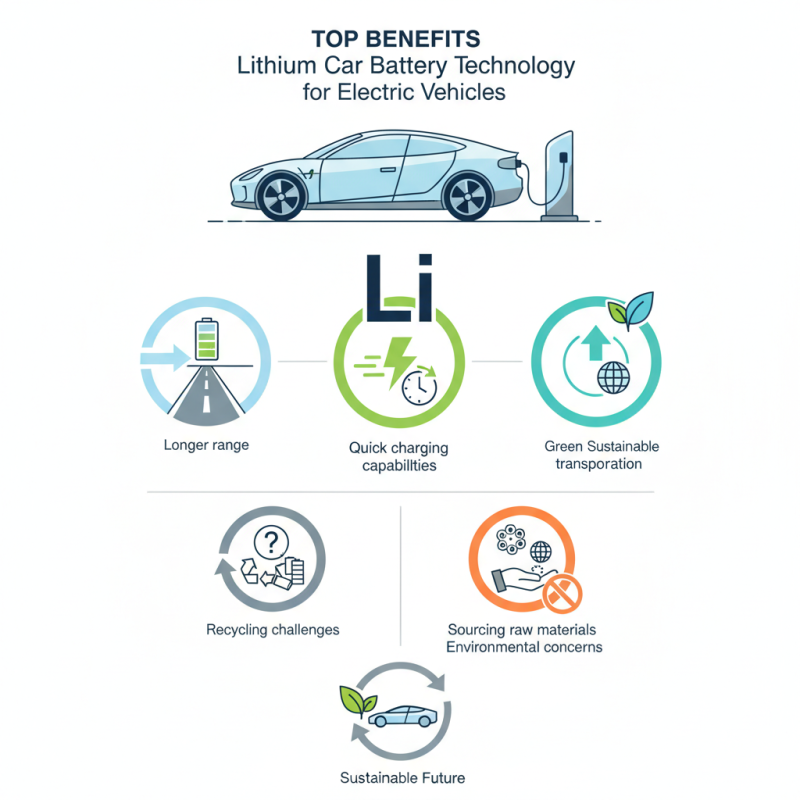
Lithium Car Batteries offer several compelling benefits. They are lighter, enabling longer ranges for electric vehicles. The quick charging capabilities also enhance the user experience. Owners can recharge their cars in a fraction of the time needed for traditional batteries. However, not everything is perfect. Recycling lithium batteries remains a challenge. There are environmental concerns that need serious attention.
Moreover, as demand grows, sourcing raw materials may become more difficult. The industry's rapid pace creates opportunities but also leaves gaps. As we embrace this technology, reflection is crucial. Evaluating its environmental impact ensures a sustainable future for electric vehicles.
Advantages of Lithium Batteries in Electric Vehicle Performance
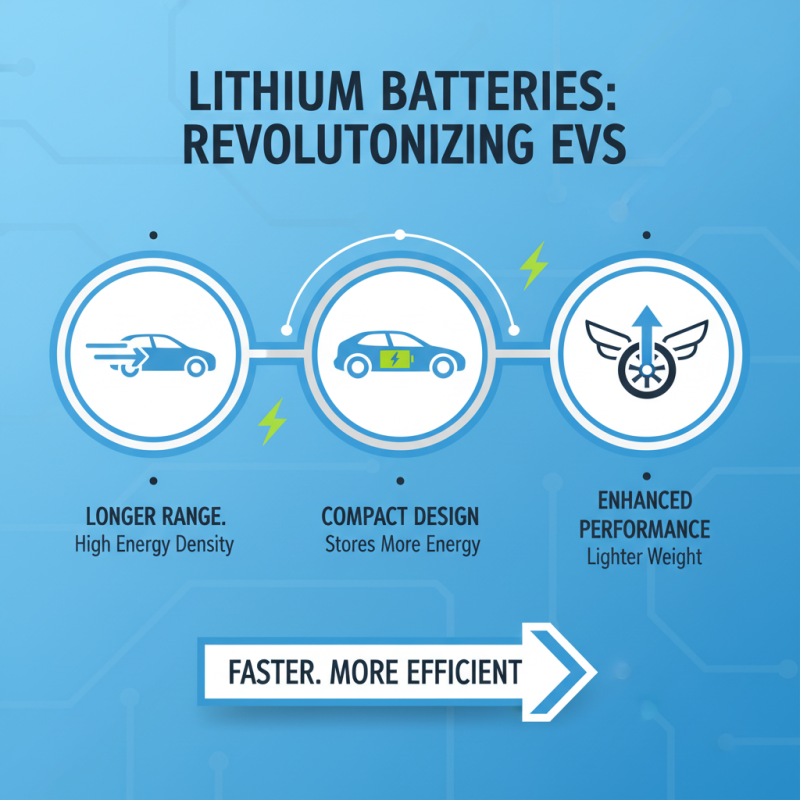
Lithium batteries are transforming electric vehicles (EVs). They offer impressive energy density. This means longer driving ranges on a single charge. Such batteries can store more energy in a smaller space. This feature is vital for sleek and compact EV designs. Lightweight lithium batteries also enhance vehicle performance. They help reduce the overall weight, which directly influences speed and efficiency.
Charge times are another advantage. Lithium batteries can recharge quickly, making them convenient for modern drivers. In urban areas, fast chargers can provide substantial power in under an hour. This capability enables EV owners to continue their journeys with minimal waiting. The rapid advancement in technology is promising. Yet, there’s the challenge of battery lifespan and degradation. Over time, performance may diminish, impacting driving range.
Battery recycling remains an ongoing concern. As usage expands, finding eco-friendly solutions is crucial. Sustainable practices in battery disposal can minimize environmental impact. A balanced approach is necessary to ensure the future of EV technology. Despite challenges, the road ahead seems bright for lithium batteries in electric vehicles.
Enhanced Energy Density and Range of Lithium Car Batteries
Lithium car batteries are transforming the electric vehicle (EV) landscape. Their enhanced energy density allows vehicles to store more energy in a smaller space. This means longer driving ranges, making EVs more appealing to consumers. Some batteries can deliver over over 300 miles on a single charge, reducing range anxiety for drivers.
Tips: Consider your driving habits. If you often drive long distances, look for models with high energy density batteries.
Lithium batteries also exhibit faster charging times. Many can recharge to 80% in just 30 minutes. This convenience makes electric vehicles more practical for daily use. However, not all charging stations offer these fast options. Planning your trips around charging availability remains important.
Tips: Use charging station apps to locate nearby fast chargers. This can save time and ensure a smoother journey.
Despite the positives, lithium batteries face challenges. Their production involves environmental concerns that must be addressed. Furthermore, battery performance can degrade over time, impacting range and efficiency. Understanding these complexities is crucial for informed decision-making about EV ownership.
Rapid Charging Capabilities of Lithium Battery Technology
Rapid charging capabilities of lithium battery technology revolutionize electric vehicles (EVs). A report from the International Energy Agency noted that EV sales surged by 40% in 2020. This trend is largely due to advancements in battery technology. Lithium batteries can achieve an 80% charge in as little as 30 minutes. This significantly reduces downtime for drivers.
Another study from BloombergNEF indicates that lithium-ion batteries could drop 58% in cost by 2030. This decreased pricing complements their rapid charging abilities. However, rapid charging may also lead to thermal issues, requiring careful management. Frequent fast charging can degrade the battery faster. This is an important consideration for users.
Furthermore, the energy density of lithium batteries is quite impressive. They can store more energy in less space. This feature allows for lighter EVs with longer ranges. However, the actual experience varies among different models. Users must reflect on their charging habits and vehicle choices. Rapid charging brings convenience, but its long-term effects on battery life need attention. It's not a perfect solution yet.
Top Benefits of Lithium Car Battery Technology for Electric Vehicles
Longer Lifespan and Durability of Lithium Batteries in EVs
Lithium batteries are changing the game for electric vehicles (EVs). Their longer lifespan is one significant advantage. Most lithium batteries can last for 8 to 15 years. This durability reduces the need for frequent replacements. Car owners appreciate the lower maintenance this brings.
Not all lithium batteries perform equally well, though. Factors like temperature and charging habits affect their lifespan. Some batteries may degrade faster in extreme conditions. Regular monitoring can help users understand their battery health better. With proper care, the advantages become more pronounced.
Overall, the durability of lithium batteries in EVs results in less hassle. Drivers can focus on the road, not battery issues. This technology helps make electric driving more reliable. However, ongoing research is essential for improving battery life even further.
Environmental Impact and Recycling of Lithium Batteries in Transportation
The recycling of lithium batteries poses significant environmental challenges. In 2021, approximately 200,000 tons of lithium-ion batteries were disposed of worldwide. With the rise of electric vehicles (EVs), this number will only grow. Battery life is around 8 to 15 years, leading to millions of tons of waste by 2040.
Efficient recycling is crucial. Currently, only 5% of EV batteries are recycled properly. Many end up in landfills, leading to soil and water contamination. Harmful materials in these batteries include cobalt and nickel, while lithium resources are being underutilized. The industry must improve recycling technologies and infrastructures to recover valuable materials.
Despite challenges, innovation is occurring. New methods can recover up to 95% of battery materials. Research in hydrometallurgical processes shows promise. However, public awareness and investment in recycling initiatives are lagging. Environmental impacts are often overlooked in discussions around EV benefits. Addressing these concerns is vital for sustainable transportation.
Top Benefits of Lithium Car Battery Technology for Electric Vehicles
| Benefit |
Description |
Environmental Impact |
Recycling Potential |
| High Energy Density |
Lithium batteries provide higher energy density, leading to longer driving ranges for electric vehicles. |
Reduced greenhouse gas emissions when charging from renewable sources. |
Lithium can be successfully extracted and reused in new batteries. |
| Rapid Charging Capability |
Lithium technology allows for faster charging times, improving usability for consumers. |
Reduced need for charging infrastructure expansions. |
Innovations in recycling processes are enhancing faster lithium recovery. |
| Long Lifespan |
Lithium-ion batteries typically last longer than other types of batteries, providing durability. |
Longer battery life leads to less frequent disposal and reduced waste. |
End-of-life management strategies are being developed for effective recycling. |
| Weight Efficiency |
Lightweight lithium batteries contribute to overall vehicle efficiency by reducing weight. |
Less material used contributes to reduced carbon footprint during manufacturing. |
Lightweight materials can be easier to recycle compared to heavier alternatives. |
| Lower Self-Discharge Rate |
Lithium batteries have a lower self-discharge rate, enhancing energy efficiency. |
Improved performances in energy storage reduces reliance on traditional energy consumption. |
Recyclability is being enhanced with sustainable recovery methods. |