How to Choose a Lithium Ion Phosphate Battery?
Choosing a Lithium Ion Phosphate Battery involves more than comparing capacity and price. Often called LiFePO4, this chemistry is valued for thermal stability and long cycle life under suitable conditions. But performance depends on the complete system, not the cell chemistry alone. Fit matters.
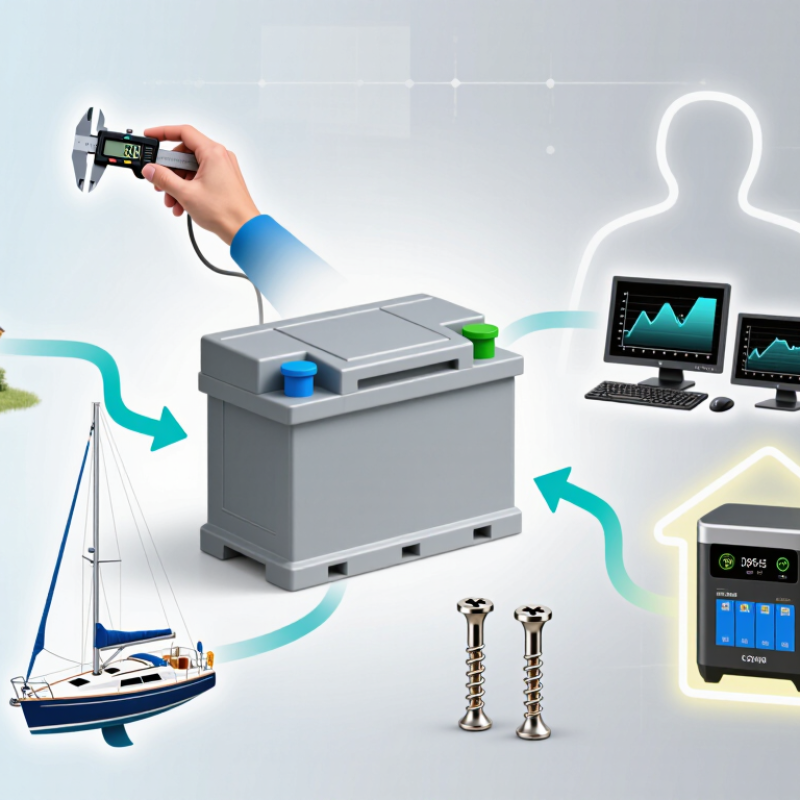
Start with the job the battery must do. A cabin solar system, a small boat, and a backup power unit have different demands. Estimate daily energy use, peak power, and the hours the battery must support your equipment. Then check that the battery’s voltage, usable capacity, and continuous discharge rating match the inverter or load.
Read the manufacturer’s datasheet closely. Compare cycle-life claims at the stated depth of discharge and temperature; headline figures can hide different test conditions. Confirm that the battery management system supports the required current, charging limits, and low-temperature protection. These details are easy to overlook.
Consider installation space, weight, terminals, monitoring features, warranty terms, and access to technical support. Ask how the battery behaves in the temperatures where it will actually operate. A product may look ideal on paper and still be awkward to install or maintain. I have seen capacity comparisons distract buyers from wiring limits and charger compatibility. That is worth reflecting on.
This guide explains how to weigh specifications, application needs, safety features, and long-term value. Use manufacturer documentation as your baseline, and seek qualified help when integrating a battery into a larger electrical system. The best choice is not always the biggest or cheapest; it is the one whose verified limits fit your real use.
Define the Application and Estimate Daily Energy Use in Wh
Before choosing a lithium iron phosphate battery, define what it must power and for how long. List each device, its rated watts, and expected daily operating hours. Multiply watts by hours to estimate energy use in watt-hours (Wh). A 120 W refrigerator running for eight compressor-hours uses about 960 Wh; a plug-in meter can reveal its actual cycling. Small loads count. Add lights, routers, and device charging, rather than relying on memory. Keep starting surges separate: a refrigerator may need more power briefly than its daily energy total suggests.
For a 1,500 Wh daily load, allow for conversion losses and the battery’s usable capacity. With an assumed 90% inverter efficiency and 80% usable battery capacity, the estimate is about 2,083 Wh: 1,500 ÷ (0.90 × 0.80). These are planning assumptions, not guaranteed specifications. NREL’s 2024 Annual Technology Baseline uses 85% round-trip efficiency for utility-scale lithium-ion storage; that figure is useful context, but it is not a rating for a particular small LFP system. The estimate will still be imperfect. Recheck it against measured use, seasonal changes, and the battery’s published usable-energy data.
How to Choose a Lithium Iron Phosphate Battery: Estimate Daily Energy Use
Example daily energy use for a small off-grid setup. Estimates are based on average power draw multiplied by daily operating time.
Estimated total: 2,820 Wh per day (2.82 kWh). Add up the energy needs of the devices you plan to run, then allow extra capacity for conversion losses and a reserve. Actual consumption varies with appliance efficiency and use.
Match Pack Voltage Using LiFePO₄’s 3.2 V Nominal Cell Voltage
A LiFePO₄ cell has a nominal voltage of about 3.2 volts.
Pack voltage usually follows the number of cells connected in series. Four cells make a 12.8 V nominal pack; eight make 25.6 V, and sixteen make 51.2 V. That distinction matters. Nominal voltage describes typical operation, not the pack’s full-charge voltage.
Start with the voltage range your equipment accepts, not just its label. A device marked “12 V” may have specific limits for charging and low-voltage cutoff. Check the battery, charger, inverter, or motor documentation before choosing a pack. Also confirm that the battery management system supports the series-cell count and protects each cell. A matching nominal voltage alone does not guarantee compatibility.
It is easy to overlook the difference between nominal and maximum voltage. For example, a four-cell pack can rise above 12.8 V during charging, so a charger designed for another battery chemistry may not be suitable. Follow the battery maker’s stated charging limits. I would pause here: voltage charts can make selection seem simpler than it is. Cable length, current demand, and temperature can also affect performance. Record the equipment’s permitted voltage range, then compare it with the pack’s specifications. A little checking now can prevent an awkward mismatch later.
Size Capacity and Verify Charge Limits Near 3.65 V per Cell
How to Choose a Lithium Ion Phosphate Battery?
Start with the load, not the battery label. Add the watt-hours your equipment uses in a typical day. A 12.8-volt battery rated at 100 amp-hours stores about 1,280 watt-hours nominally. Real usable energy is lower, especially in cold conditions or under heavy loads. Allow extra capacity for cloudy days, aging, and unexpected use. That estimate may still be rough.
Check that the battery’s continuous discharge rating can handle the equipment’s running current and brief startup surges. Then verify the charging limits for the exact cell chemistry and pack configuration. For lithium iron phosphate cells, 3.65 volts per cell is a common upper charge limit, not a target to exceed. A four-cell series pack would therefore reach 14.6 volts at that limit. Confirm the cell or battery documentation before setting a charger; pack designs can differ.
Use a charger with the correct voltage profile, and measure voltage at the battery terminals during charging. A handheld meter can catch a setup error, but it does not replace accurate equipment or the manufacturer’s specifications. Check that the battery management system supports the charger’s voltage and current. It is easy to trust a label too much. Recheck the settings after changing cables, chargers, or battery configurations.
Compare Cycle Life: Typical LiFePO₄ Ratings Reach 2,000+ Cycles
When choosing a lithium iron phosphate (LiFePO₄) battery, treat 2,000 cycles as a starting point, not a guarantee. Cycle life counts complete charge-and-discharge equivalents before capacity falls to a stated threshold, often 80%. A 50% discharge uses roughly half a cycle. Check the test conditions: depth of discharge, temperature, charge rate, and the capacity-retention endpoint. A rating without these details is hard to compare.
Tips: Ask for the test basis. Look for a cycle-life figure at the depth of discharge you expect, plus the warranty’s capacity-retention terms. Avoid assuming every cycle will be identical.
The U.S. Department of Energy’s 2022 Grid Energy Storage Technology Cost and Performance Assessment evaluates lithium-ion systems using service-life and performance assumptions; calendar life is not the same as cycle life. A battery may age while sitting unused, and heat or frequent full discharges can shorten its useful life. For a home system used daily, compare the rated cycles with your expected use: 2,000 cycles is about five and a half years at one full cycle per day. Real life can differ—sometimes more than the neat specification suggests.
How to Choose a Lithium Ion Phosphate Battery? - Compare Cycle Life: Typical LiFePO₄ Ratings Reach 2,000+ Cycles
| Battery Chemistry |
Representative Cycle-Life Range |
Typical Test Conditions |
What the Rating Means |
Selection Consideration |
| Lithium iron phosphate (LiFePO₄ / LFP) |
About 2,000–5,000+ cycles |
Often specified near 80% depth of discharge (DoD), at a controlled room temperature, with a defined end-of-life capacity threshold. |
A strong option for applications with frequent charging and discharging. Some products are rated above this range, but ratings are not directly comparable unless test conditions match. |
Check the specified DoD, temperature, charge/discharge rate, and end-of-life criterion—not just the headline cycle count. |
| Lithium nickel manganese cobalt oxide (NMC) |
About 500–1,500 cycles |
Varies considerably with cell design, operating temperature, charge rate, DoD, and voltage limits. |
Often chosen where high energy density and compact size are priorities; cycle life varies widely among cells and operating profiles. |
Compare the manufacturer’s test protocol and usable capacity with the LFP option for the intended application. |
| Lead-acid |
About 200–500 cycles in many deep-cycle applications |
Cycle life is strongly affected by DoD; ratings are commonly stated at a specified discharge depth and temperature. |
Repeated deep discharging can shorten service life. A rating at a shallow DoD should not be compared directly with one measured at a deeper DoD. |
Account for permitted discharge depth, maintenance needs, usable capacity, and replacement frequency. |
Important: Cycle-life figures are representative ranges, not guarantees. A cycle is generally a full equivalent discharge-and-recharge, so partial cycles may add up to one equivalent cycle. Actual service life depends on temperature, DoD, charge and discharge rates, storage, and the test’s end-of-life definition.
Check BMS Protection, Certifications, and Operating-Temperature Limits
How to Choose a Lithium Ion Phosphate Battery?
A lithium iron phosphate battery still needs a well-matched battery management system (BMS). Check that it protects against overcharging, deep discharge, excessive current, short circuits, and unsafe temperatures. Confirm the protection limits match the battery’s cells and intended load. A cutoff listed on a product page is not proof of tested performance. Look for a report covering the exact battery model and configuration. UL 1973 and IEC 62619 are relevant safety standards for stationary and industrial batteries. A logo alone tells you little. Check the actual report.
Temperature limits deserve equal attention. Many LFP cells specify charging around 0–45°C and discharging around -20–60°C, but these ranges vary by product. Charging below the stated minimum can damage cells, even when the battery still appears to work. The IEA’s Global EV Outlook 2024 reported that LFP made up about 40% of global electric-car battery sales in 2023. Its wider use does not remove the need to verify safety limits. A garage that gets cold overnight can matter.
Tips:
Compare the BMS cutoff settings with the cell datasheet. Check whether low-temperature charging is blocked or controlled. Ask for the certificate and test report, then match their model numbers to the battery label. Keep a little margin below maximum charging temperatures; real enclosures can trap heat. I would not rely on a short product summary alone.