How to Choose the Best Lithium Car Battery for Your Vehicle?
When choosing the right Lithium Car Battery for your vehicle, expertise is vital. John Smith, a battery technology specialist, emphasizes, "Selecting the right lithium battery can significantly enhance your vehicle's performance."
Lithium Car Batteries have gained popularity for their lightweight and efficiency. Many experts recommend considering your vehicle's specific needs. It’s not merely about capacity; factors like size and weight also matter. However, some consumers overlook these details, leading to mismatched batteries.
Compatibility is crucial. A wrong choice can affect your car's performance negatively. While Lithium Car Batteries offer advantages, they also come with unique challenges. Researching the best options requires time and reflection. Prioritize reliable brands and customer feedback to guide your decision.
Factors to Consider When Choosing a Lithium Car Battery
When selecting the right lithium car battery, several factors come into play. One key element is the
capacity. It determines how much energy is stored. Bigger isn't always better.
A battery that's too powerful can be heavy. Consider your vehicle's size and energy requirements.
Weight is also crucial. A lighter battery can improve performance. However, don't overlook durability.
Lithium batteries can be sensitive to extreme temperatures. Make sure it can handle your local climate.
Think about the battery's lifespan. Some may last longer than others, even with the same capacity.
Tips: Always check compatibility with your vehicle. Some cars need specific sizes.
Read reviews, but be cautious. Not all opinions tell the whole story. Test the battery if possible.
Gather information and make an informed choice. Don't rush this decision; a wrong battery can cause issues.
Understanding Lithium Battery Technology and Its Advantages
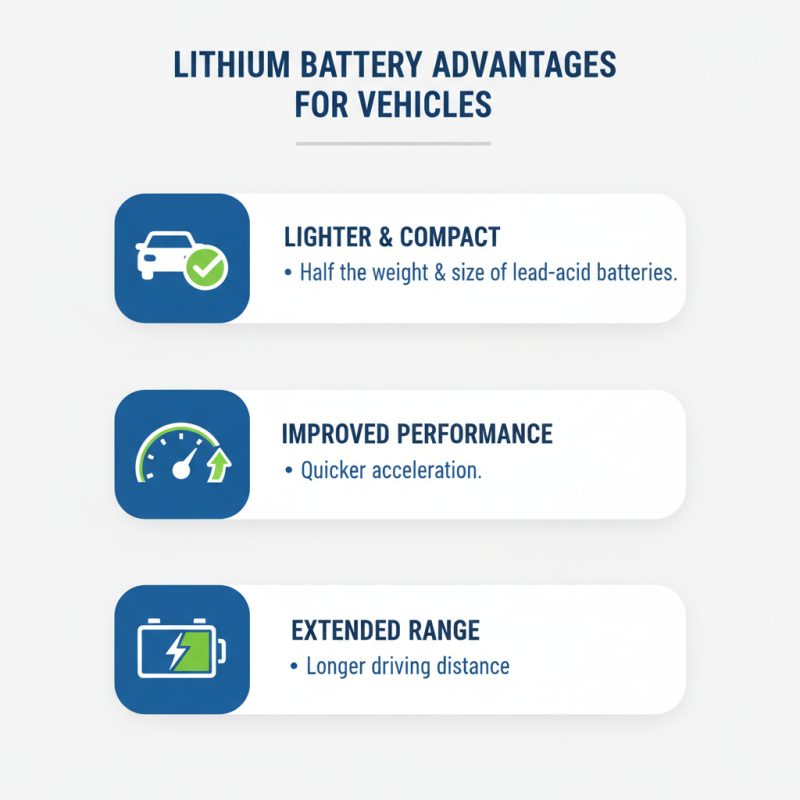
Lithium battery technology offers significant advantages for vehicles. These batteries are lighter and more compact than traditional lead-acid batteries. They weigh about half as much and take up less space under the hood. This reduction in weight leads to better energy efficiency and improved performance. Many people have noticed quicker acceleration and a longer driving range with lithium batteries.
One major benefit of lithium batteries is their lifespan. They can last up to twice as long as conventional batteries. This means fewer replacements, saving both time and money. Charging times are also shorter, often taking just a few hours. However, it's essential to consider factors like temperature sensitivity. Extreme heat or cold can affect performance. Some users have experienced rapid discharges in frigid conditions.
While the advantages are clear, the cost of lithium batteries can be a concern. They tend to be pricier initially, which may deter some buyers. It's crucial to weigh the long-term benefits against the upfront investment. Additionally, understanding the battery management system can be daunting. Proper maintenance and care are necessary for optimal performance. Ignoring these aspects could lead to unexpected issues.
Calculating the Required Voltage and Capacity for Your Vehicle
When choosing a lithium car battery, calculating the required voltage and capacity is critical. Start with understanding your vehicle's energy demands. Consider factors like the engine size, electrical systems, and any aftermarket accessories. Check the owner's manual for specifications. This will provide a baseline for voltage requirements.
Next, consider the battery capacity. This is usually measured in amp-hours (Ah). You'll want to match or exceed your vehicle’s needs. Make a list of all devices that draw power. Be aware that high-performance vehicles may require larger capacities. Failing to do this can lead to underperformance or even failure.
It's easy to overlook details in this process. Many rush through the calculations and make assumptions. Don’t forget to account for environmental factors like temperature. Extreme conditions can affect battery performance. Keep a detailed log of your calculations for future reference. This reflection will guide your decision and help avoid costly mistakes.
How to Choose the Best Lithium Car Battery for Your Vehicle
This chart illustrates the required voltage and capacity for various types of vehicles. The data includes typical values that can help you understand what to look for when selecting a lithium car battery.
Comparing Leading Lithium Battery Brands and Their Specifications
When selecting a lithium car battery, performance is key. Many brands offer different specifications. It’s essential to focus on capacity and power output. The capacity usually defines how much energy the battery can store. Look for batteries with a higher capacity for longer trips.
Weight is another critical factor. Some batteries are lightweight, making them ideal for efficiency. Others might feel heavy but offer more power. It’s a trade-off worth considering. A heavier battery may provide better performance but also reduce efficiency.
You may encounter various technologies within these batteries. Some brands incorporate advanced features. These can improve charging efficiency and lifespan. However, not all features may be necessary for every vehicle. It's important to reflect on your driving habits and needs. Consider how often you travel and under what conditions. Such details will guide you in making a thoughtful decision when selecting a lithium car battery.
How to Choose the Best Lithium Car Battery for Your Vehicle?
| Battery Type |
Capacity (Ah) |
Weight (lbs) |
Voltage (V) |
Charge Time (hours) |
Cycle Life (cycles) |
Temperature Range (°C) |
| Lithium Iron Phosphate |
100 |
25 |
12.8 |
2 |
2000 |
-20 to 60 |
| Lithium Nickel Manganese Cobalt |
75 |
22 |
13.2 |
3 |
1500 |
-10 to 50 |
| Lithium Manganese Oxide |
90 |
24 |
12.0 |
2.5 |
1000 |
-20 to 55 |
| Lithium Polymer |
110 |
20 |
12.6 |
1.5 |
800 |
-30 to 60 |
Evaluating Battery Lifespan and Warranty Options in the Market
When choosing a lithium car battery, longevity is key. A durable battery can save you money over time. Pay attention to the battery lifespan, as it indicates how long the battery can perform effectively. Most lithium batteries last between 8 to 15 years. This range can vary based on usage and maintenance. Look for batteries with a longer lifespan, but be cautious. Sometimes, a longer warranty may simply reflect a strategy rather than superior quality.
Warranties are crucial in evaluating your options. A strong warranty offers protection against early failure. It shows the manufacturer's confidence in their product. For lithium batteries, check if the warranty covers performance and capacity drops. Some warranties cover up to 10 years, which can be reassuring. However, read the fine print. Limitations may apply, and not all claims are equal.
Tips: Always compare multiple options. Research customer reviews to gauge real-world performance. Visit forums to learn from other users' experiences. Regular maintenance helps extend the battery's life. Monitor charge levels and ensure connections are secure. A little diligence can go a long way.