How to Choose Lithium Golf Cart Batteries for Your Needs?
Choosing the right Lithium Golf Cart Batteries can significantly affect your golfing experience. Industry expert John Smith, a battery technology specialist, emphasizes, "Quality batteries ensure longer rides and better performance on the course." His insights provide a foundation for understanding how to select the best batteries.
Lithium Golf Cart Batteries stand out due to their efficiency and longevity. They are lightweight compared to traditional lead-acid options. This lightweight design translates to better speed and handling. Additionally, these batteries have faster charging times, which means less downtime between rounds. However, potential buyers should be cautious. The initial investment is higher than lead-acid batteries.
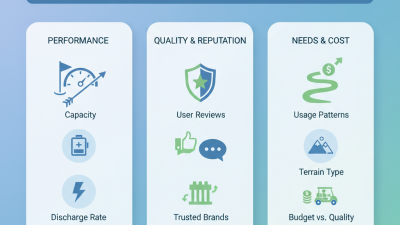
It's essential to consider your specific needs. Evaluate how often you play and the type of terrain you'll navigate. Do you require maximum range for long outings? Or are you simply looking for a reliable power source for casual games? Each golfer’s demands vary, but understanding these factors can lead to a more informed decision.

Understanding Lithium Golf Cart Batteries: Key Features and Benefits
When choosing lithium golf cart batteries, understanding their key features and benefits is essential. Lithium batteries are lighter and more compact than traditional lead-acid options. This compactness can significantly enhance your cart's performance and efficiency. The average lifespan of lithium batteries is around 10 years, compared to 3-5 years for lead-acid. According to industry reports, lithium batteries can also withstand deep discharges without damage, which increases their overall reliability.
One major benefit of lithium batteries is their faster charging time. They can recharge fully in just a few hours, allowing you to get back on the course quickly. This quick turnaround is particularly beneficial for avid golfers or commercial operations. It's important to note that while lithium batteries are initially more expensive, their long-term performance and reduced maintenance needs can lead to savings.
Tips: Consider your typical usage and charging facilities before making a decision. Evaluate how often you use the cart and for what duration. Additionally, think about the weight distribution of your golf cart, as lithium batteries can shift the center of gravity. Always prioritize quality and warranty options when making your choice. Your decision might require some compromise on initial costs for the sake of performance and longevity.
Evaluating Energy Capacity: How Ah Ratings Affect Golf Cart Performance
When selecting lithium golf cart batteries, understanding
energy capacity is essential. The Amp-hour (Ah)
rating significantly influences the performance of your golf cart. Typically,
higher Ah ratings indicate more energy storage. For example,
a battery rated at 100Ah could deliver 5 amps for 20 hours, while a
200Ah battery would provide the same current for twice as long. This means longer
outings without recharging. An industry report found that golf carts using batteries over
120Ah can achieve a range of approximately 30 miles
per charge.
Moreover, not all batteries utilize their Ah ratings efficiently. The discharge rate can vary based
on the battery design and usage conditions. Lithium batteries typically maintain a consistent voltage,
leading to predictable performance. However, it's essential to consider the weight and size of the
batteries. Heavier batteries may affect your
cart's speed and handling. Research indicates that, in some cases, a battery with a lower Ah rating
can outperform a higher-rated counterpart in real-world applications, due to its design and efficiency.
Potential users should also contemplate charging times and lifespan.
A battery with a higher Ah rating may take longer to charge but can offer more cycle life. Some studies
show that lithium batteries can last up to 2,000 cycles, much
longer than lead-acid alternatives, which average around 400-500 cycles. The choice
of Ah rating is critical, as it impacts not only performance but also long-term maintenance.
Addressing these factors can lead to a more informed decision tailored to your specific golfing needs.
Considering Voltage Options: 36V vs. 48V Lithium Batteries Explained
When selecting lithium golf cart batteries, understanding voltage options is crucial. The most common choices are 36V and 48V systems. Each voltage offers distinct performance benefits. A 36V battery typically supports lighter carts and provides adequate power for less demanding usage. Conversely, 48V batteries are ideal for heavier loads and more demanding terrains. They offer better efficiency and power output, especially useful in steep inclines or longer distances.
According to industry reports, 48V systems can deliver up to 20% more range than their 36V counterparts. This increased performance comes from the higher voltage, which allows for greater energy transfer. However, it’s crucial to assess your specific needs before making a decision. A higher voltage system may come with a weight penalty, which could affect maneuverability. Conversely, 36V batteries are lighter, leading to increased agility. It's essential to balance power needs with weight considerations.
Furthermore, battery life and charging times are also key factors. Numerous studies highlight that 48V batteries generally have longer life cycles and faster recharging capabilities. Yet, they might cost more upfront. Evaluating how frequently you'll use the cart and its weight capacity can guide your choice. Each system has trade-offs, making it important to reflect on long-term usage versus initial investment.
Assessing Lifespan and Cycle Life: What to Expect from Lithium Batteries
When choosing lithium golf cart batteries, lifespan and cycle life are critical factors. These aspects determine how long the batteries can serve before needing replacement. Lithium batteries generally offer impressive cycle life compared to traditional lead-acid options. Typically, they can endure anywhere from 2000 to 5000 charging cycles. Understanding this can help set realistic expectations about your investment.
Another essential consideration is lifespan. With proper care, lithium batteries can last several years, often exceeding ten years. This longevity can be beneficial, especially if you plan to use your golf cart regularly. However, factors like charging habits and environmental conditions can affect their performance. It's wise to regularly check battery health. This can save costs in the long run.
Finding the right balance between lifespan and cycle life involves some trade-offs. High-quality lithium batteries may cost more upfront, but they can offer greater efficiency and fewer replacements. You should also reflect on your usage patterns. If you only use the cart occasionally, a less expensive option could suffice. Knowing your needs helps in making an informed choice.
How to Choose Lithium Golf Cart Batteries for Your Needs? - Assessing Lifespan and Cycle Life: What to Expect from Lithium Batteries
| Battery Type |
Nominal Voltage (V) |
Capacity (Ah) |
Cycle Life |
Warranty Period |
| Lithium Iron Phosphate |
12 |
100 |
2000-5000 |
5 years |
| Lithium Nickel Manganese Cobalt |
48 |
200 |
1500-3000 |
3 years |
| Lithium Cobalt Oxide |
36 |
150 |
1000-2000 |
2 years |
| Lithium Titanate |
12 |
90 |
3000-7000 |
8 years |
Cost Analysis: Comparing Initial Investment and Long-term Savings in Lithium
When considering lithium golf cart batteries, cost analysis plays a crucial role. The initial investment can be higher compared to lead-acid batteries. Reports indicate that lithium batteries typically range from $800 to $2,000. However, this upfront cost belies significant long-term savings. Lithium batteries offer a lifespan of 5,000 cycles versus 300 to 500 cycles for lead-acid options.
Maintenance also adds to the long-term savings. Lithium batteries require minimal upkeep, eliminating the need for regular watering and equalization. They operate more efficiently, delivering up to 90% of their capacity, compared to only about 50% for lead-acid. With energy costs rising, these factors become essential. Over time, users may save thousands in electricity and replacement costs.
There are caveats to consider. Battery management systems can fail, leading to unexpected expenses. Users must also reflect on their usage patterns. For heavy users, the switch to lithium may offer better returns. Yet, for those with light usage, the economics might be less favorable. Balancing these aspects is key to a wise investment decision.