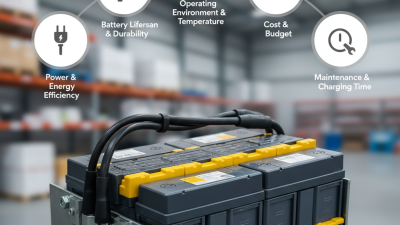
Choosing a Forklift Battery is not just a matter of picking the newest chemistry or the lowest quoted price. The right option must suit the truck, its work cycle, and the site’s charging routine. Start with the forklift manufacturer’s specified voltage, battery dimensions, connector, and minimum capacity. A pack that looks suitable on a sales sheet may not fit the compartment or meet the truck’s operating requirements. Check actual shift patterns: hours under load, lift height, travel distance, and breaks between jobs. A busy cold-storage aisle places different demands on a battery than a warm warehouse with predictable pauses. Details matter.
Then compare lead-acid and lithium-ion options against those conditions, not broad sales claims. Lead-acid systems commonly require scheduled watering and a suitable charging area. Lithium-ion systems may support opportunity charging, depending on the battery and charger specifications. A supplier should confirm compatibility and explain warranty coverage, service access, and expected maintenance. Ask for usable capacity, not only nominal capacity, and request estimates based on your real duty cycle. Numbers can mislead. Total ownership cost also includes electricity, downtime, charging equipment, and replacement planning. There is no perfect answer. Even a careful estimate can miss seasonal peaks or changing workloads, so track battery performance and review your assumptions. This guide will help you compare practical factors and ask better questions before purchase, while using the manufacturer’s specifications as the final fit check.
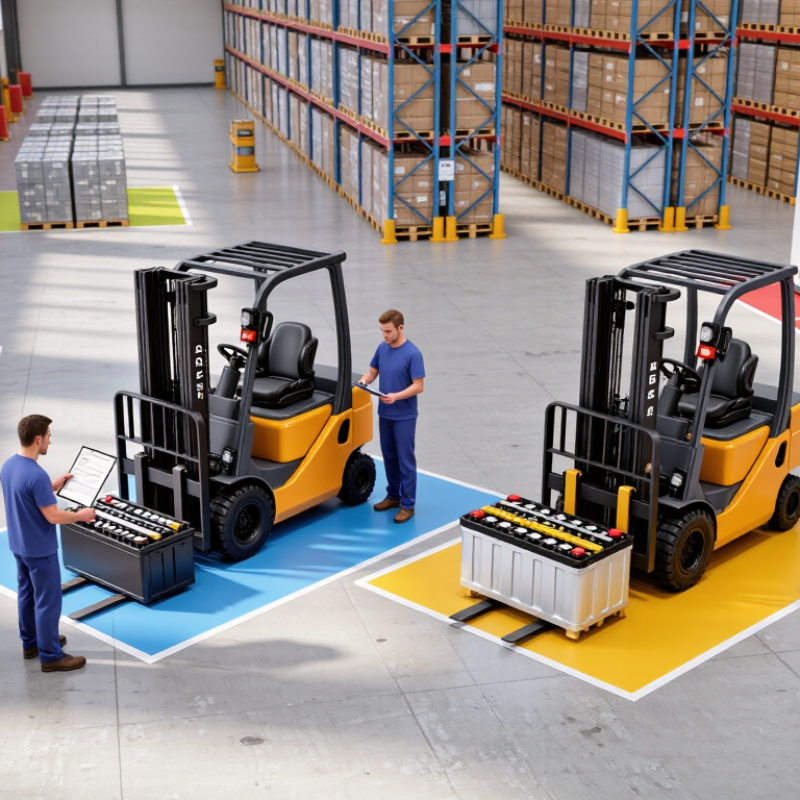
Begin with the forklift’s data plate and operator manual. Confirm the required voltage before comparing battery options. A mismatch can cause poor performance or damage electrical components. Voltage is not a guess. Check the specified amp-hour capacity, too, but treat it as a starting point rather than a promise of runtime. Actual use varies with shift length, travel distance, load weight, lift height, and time spent waiting between tasks.
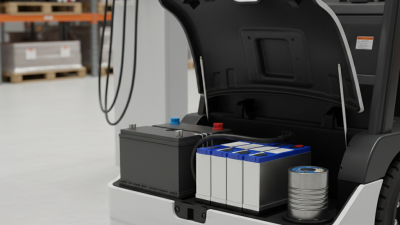
Next, measure the battery compartment and check its weight limits, connector, and polarity. A battery may have the correct voltage yet still be unsuitable if it does not fit or falls outside the forklift’s approved weight range. That weight helps maintain stability. Charging equipment matters as well: confirm that the charger is compatible with the battery’s chemistry and capacity. Lead-acid and lithium batteries can have different charging and maintenance requirements. If daily records show frequent low-charge breaks, review the work pattern before simply choosing more capacity. Estimates can miss real-world peaks, so compare specifications with operating logs and verify the choice with a qualified service professional.
A forklift’s shift pattern matters more than its advertised battery capacity. Record actual lift time, travel distance, idle periods, and attachment use across several representative shifts. A truck moving pallets continuously in a chilled loading area draws differently from one serving a warm, lightly used aisle. Cold conditions can reduce available battery performance; frequent starts, heavy loads, and long travel routes also change energy demand. Measure it.
Estimate runtime from usable battery energy divided by the truck’s observed average power draw, then verify the estimate on the floor. Include breaks, charging windows, and the time needed to return to the charging area. The U.S. Department of Energy’s 2022 Energy Storage Grand Challenge Market Report gives lithium-ion systems a typical round-trip efficiency range of 85% to 95%. That is a grid-storage benchmark, not a forklift runtime guarantee, but it shows why charging losses should not be ignored. Our first estimate is often wrong: a short observation period may miss the busiest hour. Track a full shift, and repeat during the coldest or heaviest operating conditions. Compare the measured runtime with the hours each truck must cover, including a practical reserve for delays. Cite: U.S. Department of Energy, Energy Storage Grand Challenge Market Report, 2022.
| Decision Factor | Operating Condition | Flooded Lead-Acid | Lithium-Ion | What to Check |
|---|---|---|---|---|
| Daily runtime | One shift with predictable breaks | Often suitable when the battery can be fully charged between shifts. | Can suit one-shift use; opportunity charging may add flexibility. | Estimate actual working hours, including travel, lifting, and idle time. |
| Multi-shift demand | Two or more shifts with short changeover periods | May require spare batteries, a battery-changing process, and time for charging and cooling. | May reduce battery changes when charging access and battery capacity match the duty cycle. | Model shift length, breaks, charging windows, and equipment availability. |
| Charging pattern | Regular full charge overnight | Compatible with scheduled charging; allow the specified charging and cooling time. | Compatible with scheduled charging; charging time depends on charger and battery specifications. | Confirm charger compatibility, supply capacity, and available charging time. |
| Opportunity charging | Short charging periods during breaks or shift changes | Frequent partial charging can shorten service life; follow the battery maker’s charging guidance. | Often suited to partial charging when the battery and charger are designed for it. | Check permitted charging practices and whether charging breaks fit the work schedule. |
| Maintenance capacity | Staff can perform routine battery care | Requires routine inspection and watering with distilled or deionized water, as specified. | Typically does not require watering; still needs inspection and adherence to operating instructions. | Include labor, training, safety procedures, and maintenance space in the comparison. |
| Cold-storage work | Operation in chilled or freezer areas | Low temperatures can reduce available capacity and affect charging; charging may need a warmer area. | Low temperatures can reduce available capacity and may limit charging; some systems offer battery heating. | Verify the battery’s approved operating and charging temperature ranges for the site. |
| High-intensity duty | Frequent lifting, long travel distances, or heavy loads | Higher current demand can reduce usable runtime; correct sizing is essential. | Can provide consistent power, subject to the battery’s rated output and thermal limits. | Use measured duty-cycle data, not shift length alone, to size the battery. |
| Runtime estimate | Compare required hours with usable battery energy | Usable energy depends on rated capacity, discharge limits, temperature, and duty cycle. | Usable energy depends on rated capacity, battery controls, temperature, and duty cycle. | Approximate runtime (hours) = usable battery energy (kWh) ÷ average power demand (kW). Confirm with operating data. |
| Selection tip: Compare total usable energy, charging opportunities, temperature, maintenance needs, and required runtime. Confirm battery and charger compatibility with the forklift manufacturer’s specifications. | ||||
Lead-acid batteries remain common because their purchase cost is often lower and their performance is well understood. Their weight can help counterbalance some forklifts. But they need suitable charging time, routine checks, and, for many models, water replenishment. A full shift may require a battery change or a planned charging break. Small habits matter: a missed inspection can shorten battery life.
Lithium-ion batteries usually accept faster charging and can be topped up during breaks. They do not need routine watering, which can reduce daily maintenance. Their higher initial cost may be offset in operations with multiple shifts and reliable charging access. Yet performance depends on battery capacity, charger compatibility, and temperature limits. Fast charging is not magic.
The right comparison starts with the work pattern, not just the price tag. Track operating hours, loads, idle periods, and available charging windows for several typical days. Lead-acid may suit a single shift with predictable downtime; lithium-ion may fit near-continuous use. That is not a rule. I would also check service support and replacement costs, because a neat spreadsheet can miss the trouble caused by one unavailable charger or an undersized battery.
Choosing a forklift battery starts with the truck’s voltage and battery-compartment dimensions. Check the equipment plate and measure the tray; a small mismatch can cause delays. Compare expected runtime with the time available for charging. One long shift may suit overnight charging, while frequent short breaks may call for a system designed for opportunity charging. A fast charger is not a universal fix. Heat, charge limits, and connector compatibility matter.
Walk through the charging area before selecting a battery. Check electrical capacity, outlet locations, cable reach, and room for safe battery handling. Flooded lead-acid batteries need regular watering and cleaning, plus suitable ventilation during charging. Sealed and lithium systems reduce some routine tasks, but still require compatible chargers and attention to temperature limits. Facility needs can differ more than a product sheet suggests.
Maintenance plans should name who checks the battery, how often, and where findings are recorded. Look for corrosion, damaged cables, unusual heat, or declining runtime; small changes can signal a larger issue. One detail is easy to miss: charging habits vary between shifts, even in the same building. A written routine helps, though it will need adjustment when workloads change. Compare total operating needs, not just purchase price. A neat spreadsheet cannot capture every cramped aisle or rushed handoff.
Typical full-charge time by battery type
Lead-acid batteries commonly need around 8 hours to charge, followed by cooling time; lithium-ion batteries can often recharge in about 1–2 hours with a compatible charger. Actual times vary by battery capacity, charger, and operating conditions. Also check facility needs: lead-acid systems typically require watering and suitable ventilation, while lithium-ion systems require charger and battery-management compatibility.
Evaluate the full cost, not just the purchase price. Include electricity, charger upgrades, maintenance, replacement intervals, and downtime during charging. A battery that costs less upfront may require more frequent watering or scheduled charging pauses. PNNL’s 2022 Energy Storage Technology and Cost Characterization Report uses round-trip efficiency assumptions of about 85% for lithium-ion and 75% for lead-acid systems. These are stationary-storage benchmarks, not forklift guarantees, but they show why energy losses belong in the cost calculation. Your actual results depend on the truck, workload, and charging habits.
Safety and battery life depend on daily routines. Check the battery’s rated capacity against your longest shift, including cold starts and heavy lifts. A short test during a quiet shift can miss the real peak. OSHA’s powered industrial truck standard, 29 CFR 1910.178(g), addresses designated battery charging and changing areas. Plan for secure connections, suitable ventilation, and clear access around charging equipment. Battery service also needs trained staff and consistent inspection records.