7 Flow Batteries Buying Tips for Global Buyers

Global energy storage is expanding quickly, but choosing a system still depends on the job it must perform. The International Energy Agency’s Batteries and Secure Energy Transitions report recorded 42 GW of battery storage additions worldwide in 2023, a 130% increase from 2022. That figure covers battery technologies broadly, not Flow Batteries alone. Still, it signals why buyers need to compare performance, project duration, and operating conditions rather than follow market momentum.

Flow Batteries can separate energy capacity from power output, which may suit projects requiring long discharge periods or frequent cycling. The U.S. Department of Energy’s Long Duration Storage Shot aims to cut the cost of grid-scale storage lasting more than 10 hours by 90% by 2030. It is a target, not a guarantee of today’s project economics. That changes the calculation. A buyer should examine usable capacity, efficiency, degradation, maintenance needs, and the supplier’s operating references.

This guide presents seven practical buying considerations for global buyers, from application fit and system design to warranties, safety documentation, and lifetime cost. Compare quotes against the same duty cycle and site assumptions; otherwise, attractive prices can conceal different performance boundaries. Ask for evidence from installations with comparable climates and operating patterns. Not every site. Flow battery projects can involve trade-offs in footprint, balance-of-plant complexity, and supplier availability. Some details will remain uncertain until bids are tested against real project data. Start with the requirements, then judge each offer on verifiable evidence.

7 Flow Batteries Buying Tips for Global Buyers

Understand Flow Battery Types and Their Operating Principles

7 Flow Batteries Buying Tips for Global Buyers
Understand Flow Battery Types and Their Operating Principles

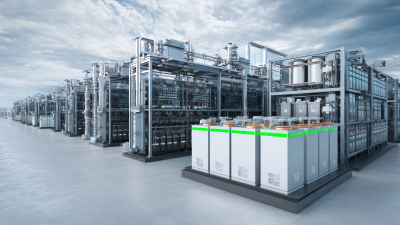
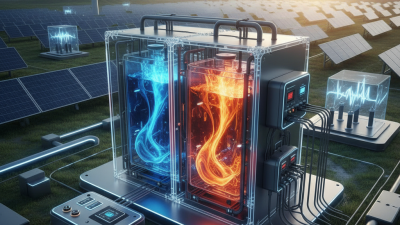
Flow batteries store energy in liquid electrolytes held in external tanks. Pumps move the liquids through an electrochemical cell stack, where ion exchange creates electricity during discharge. Tank volume largely determines energy capacity; the stack size affects power output. In vanadium redox systems, both electrolytes use vanadium at different oxidation states. This can reduce cross-contamination risk, though pumps and seals still need careful inspection.

Other designs behave differently. Zinc-bromine batteries circulate electrolyte while depositing zinc on an electrode during charging. Iron-based systems use iron chemistry and may involve metal plating, depending on the design. PNNL’s 2022 Grid Energy Storage Technology Cost and Performance Assessment reports round-trip efficiency around 65% for vanadium redox systems. Actual performance varies with operating conditions and system boundaries. Check the assumptions.

Tip: Ask suppliers to identify the chemistry, usable energy, and rated power separately. Request efficiency figures at the intended discharge duration, not just a headline value. Compare electrolyte management, pump loads, and maintenance requirements, too. A large tank is not a complete performance guarantee. That detail is easy to overlook.

Flow Battery Types: Standard Cell Voltage

Compare the approximate standard cell voltage derived from the standard reduction potentials of each chemistry’s redox couples.

Vanadium and iron-chromium batteries store energy in dissolved redox-active electrolytes circulated through a cell stack. Zinc-bromine systems use circulating electrolyte and plate zinc during charging. Values shown are approximate standard cell voltages, calculated from standard electrode potentials; practical operating voltage varies with electrolyte composition, state of charge, temperature, and system design. Use manufacturer specifications when comparing products.

Define Energy, Power, and Site Requirements

Start with the job the battery must do, not a catalogue rating. Record required discharge power in megawatts, delivered energy in megawatt-hours, and the operating window. A 10 MW load sustained for 10 hours requires 100 MWh delivered, before reserves, conversion losses, and site auxiliaries. That distinction matters. The U.S. Department of Energy’s 2022 Grid Energy Storage Technology Cost and Performance Assessment uses a 10-hour case to evaluate vanadium redox flow batteries. Treat it as a comparison point, not a project specification.

Flow batteries can scale power equipment and energy capacity separately, but this flexibility does not remove site constraints. Check the grid connection limit, available footprint, ambient temperature range, access routes, and space for tanks and maintenance. NREL’s Storage Futures Study examines storage across different durations, underscoring that the right configuration depends on how long the site actually needs discharge. A spreadsheet may miss a cold-weather derating or a difficult delivery route.

Build an hourly load profile from real operating data, then mark peak demand, outage duration, and expected cycling frequency. Ask suppliers to state usable energy at the point of connection, not only nominal capacity. Include degradation and auxiliary consumption in the calculation. Small details matter. Revisit assumptions with the site engineer; early estimates are often too neat.

Compare Chemistry, Efficiency, and Operating Conditions

7 Flow Batteries Buying Tips for Global Buyers

Compare chemistry before comparing price. Vanadium systems use the same element in both electrolyte tanks, while iron-based designs use different active materials. Ask for electrolyte lifetime, replacement assumptions, and local supply options. Then check whether the quoted capacity refers to usable energy, not just tank volume. Small detail. It matters.

Compare efficiency on an apples-to-apples basis. IRENA’s Electricity Storage and Renewables: Costs and Markets to 2030 reports flow-battery round-trip efficiency in a broad 60–85% range, depending on design. Request measured AC-to-AC results at your expected power level. Include pumps, controls, and conversion equipment; auxiliary loads can reduce delivered energy. The U.S. Department of Energy’s 2022 Grid Energy Storage Technology Cost and Performance Assessment is also useful for comparing system-level assumptions, rather than stack figures alone.

Operating conditions deserve equal attention. Confirm the supplier’s allowable temperature range, ventilation needs, water quality requirements, and maintenance intervals. Model hot afternoons, cold starts, and partial-load operation at the actual site. Ask how performance changes as components age. A tidy spreadsheet can still mislead. I would also request a written test protocol and warranty conditions tied to cycling and temperature; buyers sometimes overlook these until commissioning begins.

7 Flow Batteries Buying Tips for Global Buyers - Compare Chemistry, Efficiency, and Operating Conditions

Buying tip Dimension to compare Relevant facts What buyers should verify
1. Match the chemistry to the project Electrolyte chemistry and system design Vanadium redox systems use vanadium in both electrolyte tanks. Iron-chromium systems use iron- and chromium-based electrolytes. Zinc-bromine systems plate and strip zinc during operation, so their operating and maintenance requirements differ from all-liquid redox systems. Request chemistry-specific operating procedures, electrolyte handling details, maintenance schedules, and evidence from installations with a similar duty cycle. Do not compare systems on electrolyte price alone.
2. Compare efficiency on the same basis AC round-trip efficiency (RTE) RTE depends on chemistry, system configuration, operating temperature, discharge duration, and auxiliary loads such as pumps and controls. Cell-level or DC figures are not directly comparable with complete-system AC performance. Ask for guaranteed net AC RTE at the point of connection, including stated charge and discharge power, duration, ambient conditions, and auxiliary consumption. Confirm the test method and whether figures are measured or modeled.
3. Size for the required discharge duration Power (MW), energy (MWh), and hours at rated output Flow batteries generally store energy in liquid electrolyte held in tanks, while stacks determine much of the system’s power capability. This can allow energy capacity and power capacity to be sized separately, subject to the specific design. Specify usable AC energy, rated power, discharge duration, reserve state of charge, and end-of-life capacity. Check whether future expansion requires additional tanks, electrolyte, stacks, or balance-of-plant equipment.
4. Check the operating environment Temperature, ventilation, altitude, and site conditions Electrolyte properties and system performance vary with temperature. Pumps, piping, tanks, and power-conversion equipment also have defined environmental limits; required heating, cooling, or ventilation depends on the design and location. Obtain the guaranteed operating and storage temperature ranges, derating curves, climate-control loads, and site-preparation requirements. Confirm suitability for local humidity, dust, corrosion exposure, and seismic or wind conditions where applicable.
5. Evaluate degradation and service needs Stack life, electrolyte management, and maintenance Flow-battery stacks and balance-of-plant components can require service or replacement over the project life. Electrolyte balancing and maintenance needs are chemistry- and system-specific; zinc-bromine systems also require attention to zinc plating and stripping processes. Request a lifecycle maintenance plan, replacement assumptions, spare-parts availability, service response times, and the expected capacity or efficiency trajectory. Clarify which activities are included in the service agreement.
6. Review safety and materials compatibility Electrolyte containment, corrosion control, and emergency planning Aqueous electrolytes are not a substitute for site-specific hazard assessment. Electrolyte composition, containment design, piping materials, leak detection, and ventilation requirements differ by chemistry; bromine-based systems require particular attention to bromine containment and handling. Review safety data sheets, hazard analyses, secondary-containment design, leak-response procedures, fire and building-code compliance, and permits required in the project jurisdiction.
7. Compare lifecycle cost and warranty terms Installed cost, usable energy, guarantees, and end-of-life obligations Total cost depends on more than the battery equipment price. Civil works, tanks, power conversion, site climate control, maintenance, replacements, efficiency, and electrolyte handling can affect lifetime economics. Compare total cost over the same project term and operating profile. Check warranty limits for energy throughput, availability, capacity, and efficiency, along with degradation assumptions, recycling or recovery arrangements, and performance remedies.

Note: Performance and operating requirements vary by system design and project conditions. Compare supplier guarantees using the same AC measurement boundary, duty cycle, and environmental assumptions.

Assess Supplier Quality, Certifications, and Project Experience

When assessing a flow-battery supplier, look beyond polished brochures. Request certificates that match the actual factory, product model, and manufacturing scope. Check issuing bodies, validity dates, and whether independent testing supports key performance claims. Certification requirements vary by destination and project, so confirm them against your own installation plan. Paperwork can look complete and still leave gaps.

Ask how the supplier controls stack assembly, electrolyte handling, and final testing. Useful evidence includes batch traceability, inspection records, and factory acceptance test procedures. Request sample results for capacity, efficiency, and leakage checks, then ask how failures are documented. The answer matters. A quality system is only convincing when staff can explain what happens after a test fails.

Project experience should resemble your operating conditions, not just your preferred system size. Review references for comparable power, storage duration, climate, and grid connection. Ask about commissioning delays, maintenance needs, and performance after several years. No two sites are identical, and a reference project may not predict yours perfectly. That limitation deserves an honest discussion. Speak with project owners where possible, and verify what the supplier delivered, rather than relying only on a presentation.

Evaluate Total Ownership Costs, Warranties, and Service Support

A flow battery’s purchase price is only the visible part of its cost. Compare the installed price with the energy it is expected to deliver over its operating life. Include pumps, controls, electrolyte checks, site preparation, and scheduled labor. Ask suppliers to show their assumptions for efficiency, availability, and electricity prices. Small changes in these inputs can shift a payback estimate.

Read the exclusions. Check warranty coverage for electrolyte, stack components, pumps, and control systems. Confirm how capacity loss is measured, including the stated temperature and operating schedule. A warranty may promise many years but set narrow cycling limits. Ask who pays for transport, diagnostics, and replacement labor, and keep the details in writing.

Service support matters most when a fault interrupts operation. Request response-time targets, technician coverage, spare-parts locations, and clear escalation steps. For remote sites, confirm which alarms can be diagnosed remotely and what requires a site visit. Ask for a sample maintenance log and an anonymized service case. If cost estimates assume perfect uptime, challenge them. That assumption is often too neat, and I may be overly cautious, but unclear responsibility for routine checks can become an unexpected expense.