Choosing the right Lithium Ion Battery Cell is not simply a matter of comparing capacity, voltage, and price. The decision affects safety, operating range, product life, charging time, and total ownership cost. The International Energy Agency reported that global electric vehicle battery demand exceeded 750 GWh in 2023, growing by about 40% in one year. This scale shows the market’s momentum, but it also reveals a problem: more choices do not always mean better choices.
Real selection is messier.
A practical evaluation begins with the application. A compact medical device may need stable discharge and long calendar life, while an electric bicycle may prioritize energy density, vibration resistance, and peak current. Lithium iron phosphate cells usually offer strong thermal stability and cycle durability, but nickel-rich chemistries can provide higher energy density. Neither chemistry wins everywhere. BloombergNEF’s Battery Price Survey 2023 placed average lithium-ion pack prices at $139 per kWh, yet pack-level cost alone cannot predict performance in a specific design.
Check the details carefully. Review the manufacturer’s datasheet, test conditions, cycle-life definition, internal resistance, and production traceability. A cell rated at 3,000 mAh may deliver less capacity under high current or low temperature. It happens often. Engineers should also verify protection design, balancing requirements, abuse-test evidence, and relevant standards such as IEC 62133-2, UL 1642, and UN 38.3 transport testing. This guide explains how to compare these factors realistically, identify unreliable claims, and select a Lithium Ion Battery Cell that fits both technical requirements and responsible product development.
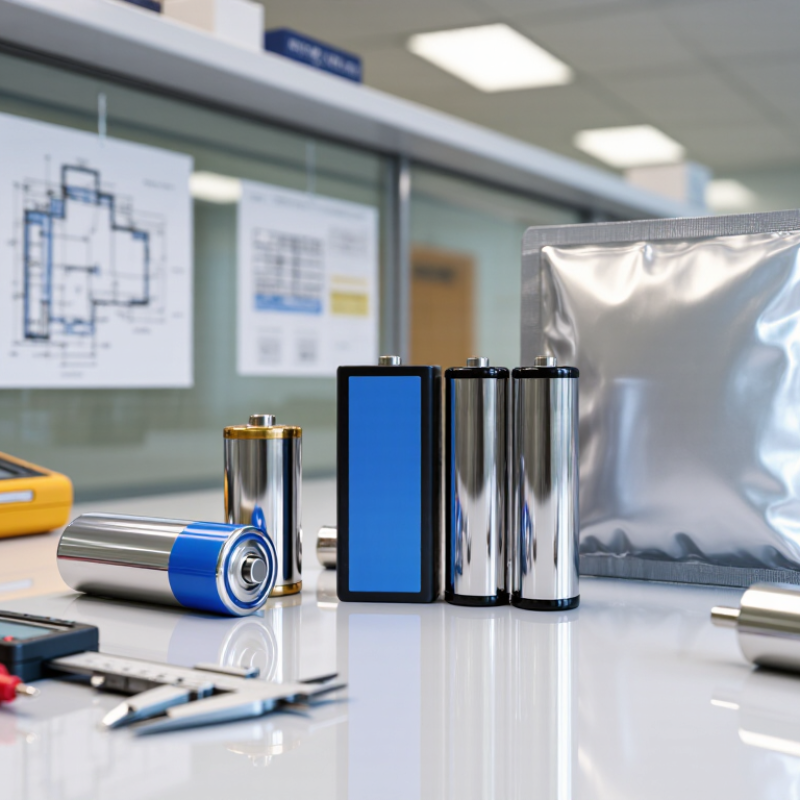
Choosing the right lithium-ion cell starts with chemistry, not package shape. Prismatic, cylindrical, and pouch cells describe physical formats. LFP, NMC, and LCO describe electrochemical choices. LFP cells offer strong thermal stability, long cycle life, and lower material costs. They usually provide less energy density than NMC cells, however. NMC chemistry fits weight-sensitive applications requiring more energy in a smaller space. LCO remains common in compact electronics, but it demands careful protection and thermal control.
The International Energy Agency’s Global EV Outlook 2024 reported that LFP batteries represented nearly 40% of the global electric vehicle battery market in 2023. That share has grown sharply since 2020.
BloombergNEF’s 2023 Battery Price Survey recorded an average lithium-ion pack price of 139 dollars per kilowatt-hour, a 14% annual decline. This figure describes packs, not individual cells. The distinction matters when comparing quotations.
Real selection depends on operating conditions. A delivery vehicle facing cold mornings may need stronger low-temperature charging controls. A stationary system may value cycle life over peak energy density. Check nominal voltage, usable capacity, maximum continuous current, cycle-life test conditions, and recommended charge limits. Ask whether testing used controlled laboratory conditions. It often does. A spreadsheet can still mislead. Cell aging, cooling design, compression, and matching quality can change field performance. I would not choose chemistry from energy density alone. Safety margins and service conditions deserve equal weight.
How to Choose the Right Lithium Ion Battery Cell?
Defining Voltage, Capacity, and Energy Requirements
Choosing a lithium ion battery cell starts with the device’s voltage range, not its physical size. A cell’s nominal voltage is different from its fully charged voltage. For example, a cell rated near 3.6 volts may reach about 4.2 volts when full. Your circuit must tolerate both values. If more voltage is required, cells can connect in series, but the battery management system must monitor each group carefully.
Capacity describes how much charge a cell can store, measured in ampere-hours. Energy is usually more useful for real applications. Calculate it with this simple formula: watt-hours equals volts multiplied by ampere-hours. A 3.6-volt, 3-Ah cell stores roughly 10.8 watt-hours under rated conditions. Actual results may be lower. High current, cold temperatures, aging, and conversion losses all reduce usable energy.
Do not size the cell from a calculation alone. Check the continuous current rating, peak load, charging limits, and operating temperature. A flashlight and a power tool may need very different cells, even with similar energy demands. In practical testing, I compare datasheet figures with measured voltage sag under load. This often reveals uncomfortable gaps. The cell may meet the capacity target but fail during a sudden current demand. Leave sensible margin, then review the design again. Small assumptions can become expensive problems.
Defining voltage, capacity, and energy requirements
The chart compares representative battery-pack requirements for common applications. Energy is calculated as Voltage × Capacity. Voltage determines how many cells must be connected in series, while capacity determines how many parallel cell groups are needed. Select cells whose nominal voltage, usable capacity, discharge current, and chemistry match the application requirements.
Choosing a lithium ion battery cell begins with the device’s power and runtime requirements. A cell rated at 3,000mAh does not automatically deliver three hours of operation. Runtime depends on load, voltage, temperature, and conversion losses. Power demand equals current multiplied by voltage. For example, a 6A load at 3.7V requires about 22W. The selected cell must support that current continuously, not only during brief peaks. Short bursts can mislead. A cell may appear suitable during testing, then lose voltage under sustained demand.
Tips: Check the continuous discharge rating, not just the maximum value. Compare the cell’s nominal voltage with the device’s operating range. Estimate runtime using usable capacity, then reduce that estimate by 15–25% for real-world losses. Leave extra current headroom when motors, heaters, or radio transmitters start suddenly. Review the manufacturer’s datasheet and confirm results with a controlled load test.
Higher capacity can improve runtime, but it often increases size, weight, or charging time. High-drain cells may handle power better, yet their capacity can be lower. Temperature also changes performance; a cold cell may show weaker output and shorter runtime. Aging matters too. After repeated cycles, internal resistance rises and usable capacity falls. My own calculations have sometimes been optimistic because they ignored cable resistance. Measure the complete system, including connectors and protection electronics, before approving the final cell.
A cell’s label is only the starting point. In practical evaluation, check its chemistry, voltage range, charging limits, and protection requirements. Look for clear datasheets, traceable production batches, and independent safety test reports. The cell should also work with a suitable battery management system. Do not ignore physical damage, swelling, unusual odors, or loose terminals.
Safety comes first.
Match the cell’s nominal voltage, capacity, continuous current, pulse current, terminals, and enclosure space. A cell that fits tightly may suffer poor cooling or mechanical stress. Measure the compartment carefully, including wires and insulation.
Operating conditions matter just as much. Cold temperatures can reduce available power, while heat can accelerate aging. Leave thermal margin around the cell, especially in enclosed equipment.
Small details matter.
Ask for batch records, capacity-test methods, internal resistance data, and storage recommendations. Compare several samples when possible. A large capacity claim without test conditions deserves caution.
Review the design with a qualified engineer, then test it under real loads, such as startup surges, long charging periods, and low-temperature use. More capacity is not always better. A slightly lower-rated cell may offer steadier performance and easier thermal control.
How to Choose the Right Lithium Ion Battery Cell?
Supplier selection should begin with evidence, not attractive pricing. BloombergNEF’s 2024 Lithium-Ion Battery Price Survey reported an average battery pack price of $115 per kWh, down 20% from 2023. Cell prices still vary by chemistry, order volume, testing requirements, and delivery terms. Compare complete quotations. Include incoming inspection, transport, warranty handling, and replacement costs. A cheaper cell may become expensive after six months.
Ask suppliers for traceable test reports and production records. Important references include IEC 62619, IEC 62133-2, UN 38.3, and ISO 9001 quality systems. Certifications matter. However, a certificate does not guarantee every shipment is consistent. Request capacity, internal resistance, cycle-life, and safety data from the exact cell model. The International Energy Agency reported that global battery demand in the energy sector exceeded 750 GWh in 2023, rising about 40%. This scale increases manufacturing pressure. Audit discipline matters more than polished brochures.
Long-term value depends on usable energy, not only nominal capacity. A cell rated at 3,000 cycles may reach that figure under mild conditions, low current, and controlled temperature. Real equipment can be harsher. Test samples under your actual load profile. Track capacity fade and temperature rise. Keep spare cells from the same production batch when possible. I would also challenge optimistic supplier forecasts; field data often exposes assumptions. Reliable decisions combine certification, independent testing, stable supply, and realistic lifetime costs.
| Supplier Profile | Best-Fit Applications | Typical Cell Chemistry | Indicative Cell Price (USD/kWh) |
Typical MOQ | Typical Lead Time | Certification and Documentation to Verify | Typical Cycle-Life Range* | Warranty Pattern | Long-Term Value Assessment |
|---|---|---|---|---|---|---|---|---|---|
| High-volume, audited manufacturer | Electric mobility, stationary energy storage, commercial equipment, and large production programs | LFP for safety and cycle life; NMC for higher energy density | LFP: $45–$75 NMC: $60–$100 |
10,000–50,000+ cells | 8–16 weeks, including production planning | Model-specific UN 38.3 test summary, IEC 62619 or applicable safety standard, ISO 9001; request batch traceability and safety data sheets | LFP: 2,000–6,000 NMC: 1,000–2,500 |
Usually 5–8 years, subject to operating limits and annual throughput | High Best process control, documentation, capacity planning, and potential for consistent cell matching |
| Mid-volume specialist manufacturer | Industrial tools, light electric vehicles, backup power, and medium-sized storage systems | LFP, NMC, or high-power cylindrical cells depending on the design | LFP: $60–$95 NMC: $80–$125 |
1,000–10,000 cells | 6–12 weeks | Verify that UN 38.3, IEC or UL documentation applies to the exact cell model; request incoming inspection records and production-change controls | LFP: 2,000–5,000 NMC: 800–2,000 |
Usually 3–5 years, with limits on depth of discharge and temperature | Medium to High Often a good balance between engineering support, flexibility, and purchase price |
| Authorized distributor or stock supplier | Prototype builds, repairs, pilot production, and urgent replacement requirements | Standard cylindrical or prismatic LFP and NMC cells already in inventory | LFP: $85–$150+ NMC: $100–$180+ |
100–1,000 cells | 1–4 weeks, depending on stock | Require the original UN 38.3 documentation, date-code information, certificates of analysis, storage history, and evidence of authorized supply | Depends strongly on cell age, storage conditions, and chemistry; verify with sample testing | Commonly 1–3 years or limited by the distributor’s terms | Medium Higher unit cost but lower inventory commitment and faster availability |
| Low-cost, newly established supplier | Cost-sensitive projects with qualified engineering teams and strong incoming inspection | Usually LFP or NMC; chemistry and grade must be independently validated | LFP: $40–$70 NMC: $55–$95 |
20,000–100,000+ cells | 12–24 weeks | Do not rely on generic certificates; verify model-specific UN 38.3, safety testing, factory quality controls, traceability, and transportation compliance | Potentially within the chemistry range, but validation testing is essential | May be 1–3 years or contract-dependent; review financial and service continuity risk | Variable Lowest initial price can be offset by qualification, failure, logistics, and replacement costs |
| Premium high-power cell specialist | Power tools, robotics, acceleration-focused mobility, and applications requiring high discharge rates | High-power NMC or other power-optimized lithium-ion formats | $90–$180+ | 2,000–20,000 cells | 8–18 weeks | Verify UN 38.3, applicable IEC or UL testing, pulse-discharge data, thermal behavior, impedance distribution, and lot-level test reports | 800–2,000, depending on discharge rate and operating temperature | Usually 3–5 years, with performance conditions based on current and temperature | High for power applications Higher purchase cost may be justified when output, heat management, and reliability are critical |