Top Low Speed Vehicle Battery Manufacturers in China?
China’s low-speed vehicle market rewards batteries that perform steadily, not just cheaply. Buyers notice the details: reliable starts on cold mornings, predictable range, and charging that fits a daily routine. These vehicles often serve short urban trips, campuses, industrial parks, and rural roads. Their battery requirements can differ from those of full-size electric cars.
The International Energy Agency’s Global EV Outlook 2024 reports that electric car sales worldwide approached 14 million in 2023. Its analysis also describes China’s leading role in battery production. These figures provide useful industry context, but they do not measure low-speed vehicles separately. That distinction matters. A broad electric-vehicle statistic cannot confirm a supplier’s performance in a specific low-speed model. Battery expert and Nobel laureate M. Stanley Whittingham has said, “The lithium-ion battery has revolutionized our lives.” His observation points to the technology’s reach, not a guarantee of quality from any individual manufacturer.
This guide examines Chinese Low-Speed Vehicle Battery manufacturers through practical selection criteria: chemistry, usable capacity, cycle-life evidence, thermal management, and after-sales support. Published specifications deserve careful checking against test conditions. A quoted cycle life, for example, may depend on temperature, discharge depth, and charging practice. Small differences matter. Supplier claims can sound precise while leaving those conditions unclear. Readers should compare documented test data, certifications, warranty terms, and real application experience before choosing a supplier. The evidence is not always easy to compare, and that limitation deserves attention.
Understanding Low-Speed Vehicle Batteries and Their Requirements
Low-speed vehicles usually travel short routes at modest speeds, but their batteries still face demanding daily use. Frequent starts, steep driveways, passengers, and cargo can raise current demand.
A battery should match the vehicle’s system voltage and controller limits. Check both carefully. A mismatch can reduce performance or damage components.
Capacity, measured in amp-hours, helps estimate operating time, but it does not guarantee a particular range. Terrain, temperature, tire pressure, vehicle weight, and driving habits all matter.
Lead-acid batteries are familiar and often have a lower purchase cost, while lithium iron phosphate batteries are lighter and typically support more charge cycles. Neither is ideal for every owner.
Charging equipment must suit the battery chemistry, and lithium packs need a properly specified battery management system.
For buyers comparing low-speed vehicle batteries, ask for test data on usable capacity, cycle life, discharge current, and performance across expected temperatures. Vibration resistance and secure mounting matter on uneven roads. So does practical service support.
A polished specification sheet can still leave questions unanswered; real-world results depend on the complete vehicle and charging routine. Battery selection is not glamorous. It is easy to overlook maintenance needs, especially when daily trips seem predictable.
Battery Technologies Used in China’s Low-Speed Vehicle Market
China’s low-speed vehicle market uses two main battery technologies: lead-acid and lithium iron phosphate (LFP). Lead-acid batteries remain familiar and often cost less upfront. Their heavier packs can reduce available payload, however, and frequent deep discharges may shorten service life. LFP batteries usually offer lower weight and more usable capacity. They need a suitable battery management system to monitor cell voltage and temperature. The right choice depends on vehicle range, load, charging habits, and budget—not chemistry alone.
In daily use, a short neighborhood trip places different demands on a battery than repeated runs with passengers or cargo. Cold weather can also reduce available range, especially when a vehicle sits outdoors overnight.
Charging equipment must match the pack’s voltage and chemistry. A mismatch can cause poor charging or unnecessary wear. That detail is easy to overlook. Sodium-ion technology is attracting attention, but buyers should verify local availability and real-world performance before treating it as a practical option.
Tips: Check the battery’s rated capacity, warranty terms, and cycle-life test conditions. Ask whether the vehicle’s charger and battery management system are matched. Compare usable range under your expected load, not just the advertised figure. A small test drive helps, though it cannot replace clear technical specifications.
How to Assess Low-Speed Vehicle Battery Manufacturers
Assessing a low-speed vehicle battery manufacturer starts with the vehicle, not the sales brochure.
Confirm the required voltage, usable capacity, peak current, charging profile, and installation space. A battery that fits the tray may still struggle on steep streets or during frequent stop-start driving. Request test data at realistic temperatures and loads, not only ideal laboratory conditions. Check whether the stated capacity includes a clear discharge rate and test method.
Small details matter.
Connector layout, terminal protection, vibration resistance, and enclosure sealing can all affect daily reliability.
Review the manufacturer’s quality controls, production traceability, and procedures for handling defects. Ask for test reports tied to the battery model you plan to buy, and verify that any claimed certifications apply to that product.
Paperwork is not proof.
Discuss warranty coverage, expected service life, replacement parts, and response times before placing an order. If possible, test a sample in the vehicle and record range, charging time, and battery temperature under normal use.
Real use can surprise.
I would not treat one successful test as a guarantee; road conditions and driver habits vary, and supplier data may leave practical questions unanswered.
Profiles of Notable Low-Speed Vehicle Battery Manufacturers in China
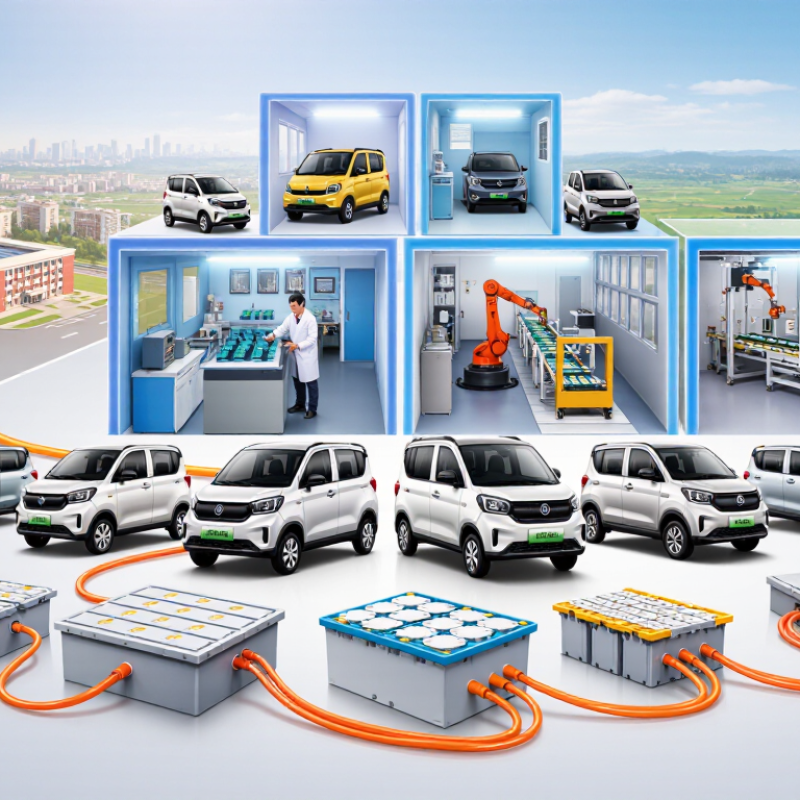
China’s low-speed-vehicle battery suppliers generally fall into three profiles. Lead-acid specialists offer familiar formats and established replacement channels. Their products suit buyers who prioritize cost and simple servicing. Lithium-pack integrators focus on compact packs, battery-management systems, and matching chargers to vehicle requirements. Cell manufacturers supply the components behind those packs, but their cell specifications alone do not prove a finished battery’s durability.
The wider market is substantial, though its headline figures need careful interpretation. China’s Ministry of Industry and Information Technology reported lithium-ion battery output above 940 GWh in 2023, up more than 25% year over year. The China Automotive Power Battery Industry Innovation Alliance reported 387.7 GWh of installed power-battery capacity that year. That figure covers the wider new-energy vehicle sector, not low-speed vehicles alone. It is context, not a direct measure of this niche.
For a practical supplier profile, check rated voltage, usable capacity, cycle-life test conditions, warranty terms, and local service access. Ask for test records under realistic temperatures and repeated charge cycles. Details matter. A polished datasheet can still leave questions unanswered, especially about pack-level performance after months of daily use. That gap deserves scrutiny.
Common Battery Chemistries for Low-Speed Vehicles
Typical nominal voltage per cell
Typical nominal cell voltage is about 2.0 V for lead-acid, 3.2 V for lithium iron phosphate (LFP), and 3.6–3.7 V for nickel manganese cobalt (NMC). Actual specifications vary by cell design; these figures compare chemistries, not manufacturers.
Market Trends and Factors Shaping Manufacturer Selection
China’s low-speed vehicle battery market is moving toward longer service life, safer thermal performance, and more tailored pack designs. Lithium iron phosphate is often considered for its durability and stable behavior, while lead-acid remains relevant where upfront cost matters. The right choice depends on route length, passenger load, charging access, and climate—not chemistry alone.
Small details matter. Ask manufacturers how they validate capacity under repeated charge-and-discharge cycles, rather than relying only on a specification sheet. A pack used on short neighborhood trips faces different demands from one powering a utility cart through a full work shift. Check cell traceability, battery management system settings, connector layout, and how the pack handles cold mornings or summer heat. Not every pack fits.
Selection is also shaped by customization and supply-chain transparency. A reliable manufacturer should explain what can change, what stays fixed, and how replacement parts will be supported over time. Request test records and clear warranty terms, then compare samples under the same operating conditions. A polished factory tour is not proof of consistent production; I would look for repeatable inspection records instead. Even then, paperwork can miss real-world wear, so field feedback deserves weight.