Top 5 Tips for Understanding Flow Batteries Benefits and Uses?
Flow batteries are revolutionizing energy storage systems globally. Recognized for their unique ability to store and dispatch energy over long periods, they offer substantial benefits. According to Dr. Emily Chen, a leading expert in energy storage technology, "Flow batteries can transform how we think about renewable energy." This statement highlights the transformative potential of flow batteries.
Their design allows for scalable energy solutions that traditional batteries cannot provide. Unlike lithium-ion batteries, flow batteries can decouple energy and power. This means they can be easily modified to meet different energy demands. Their longer cycle life and lower environmental impact make them an appealing choice for sustainable energy systems.
Yet, there are challenges. Flow batteries still face issues with cost and efficiency. Many people may not fully understand how they work. It's essential to explore these factors to appreciate flow batteries better. Learning about their potential uses in renewable integration can lead to innovative applications in energy management.

Overview of Flow Batteries: Definition and How They Work
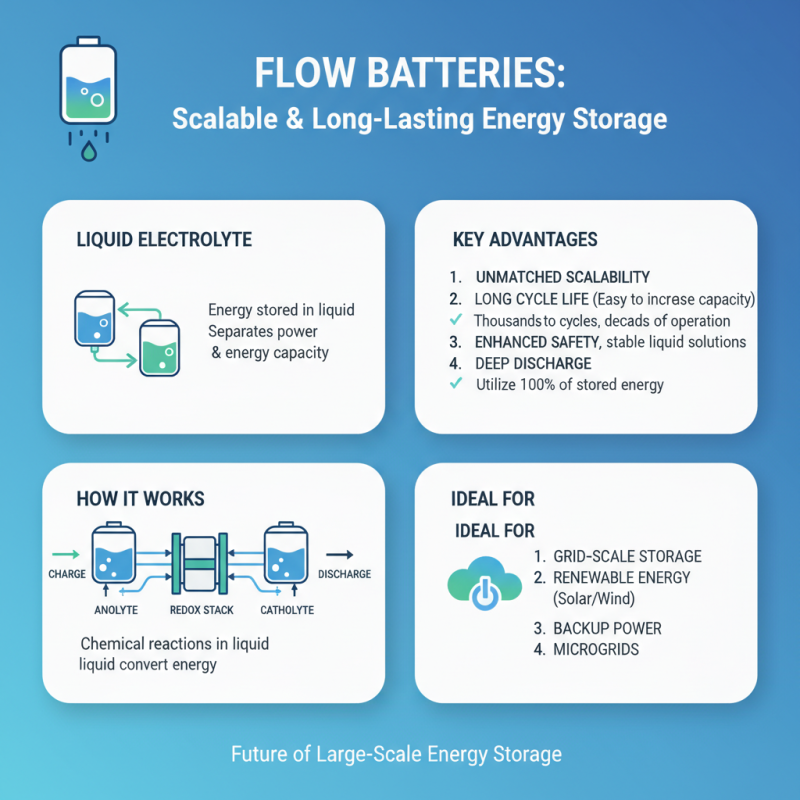
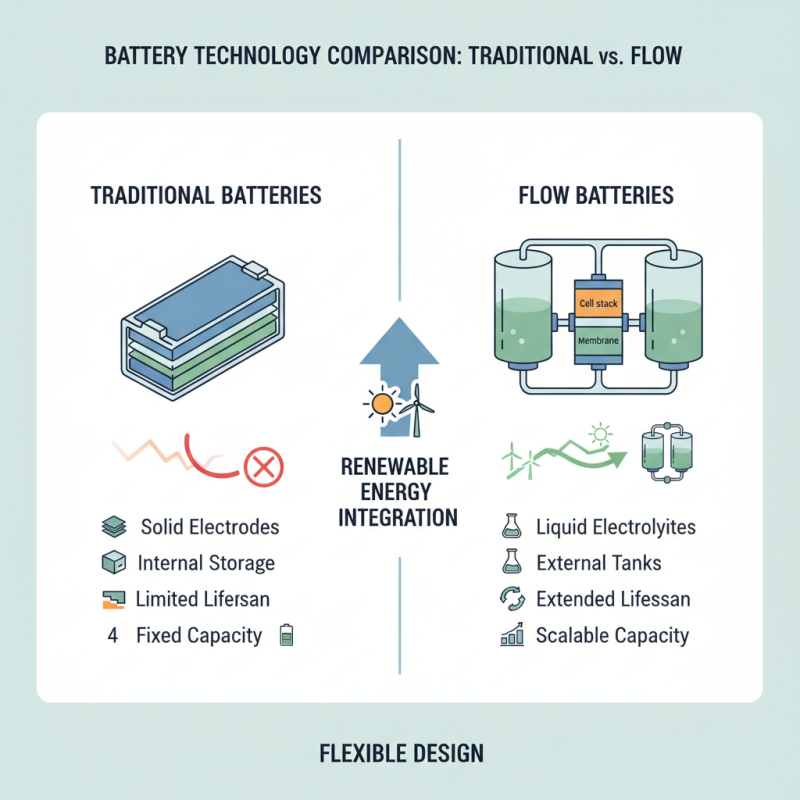
Flow batteries are a promising technology in energy storage. They differ from traditional batteries by using two fluid electrolytes. These fluids flow through a cell stack, generating power through electrochemical reactions. This design allows for scalability and longer cycling life compared to conventional batteries. Flow batteries can store large amounts of energy, making them suitable for grid applications and renewable energy integration.
Understanding their benefits is crucial. Here are some tips. First, know that flow batteries are excellent for large-scale energy storage. They can efficiently store power from solar or wind sources for later use. Second, they offer long cycle life and lower degradation rates. This extends their operational period and reduces replacement costs. Lastly, flow batteries provide flexibility in energy management. Their unique design allows you to adjust energy capacity easily by changing the size of the storage tanks.
Despite these advantages, challenges exist. Flow battery systems can be complicated to manage. Initial setup costs may also be high, which could deter some users. However, as technology improves, these barriers may diminish. Understanding flow batteries better can lead to more efficient energy solutions in the future.
Top 5 Benefits of Flow Batteries
This chart displays the top 5 benefits of flow batteries based on their rating from 1 to 10. Flow batteries excel in areas such as long cycle life and scalability, making them suitable for various applications in energy storage.
Key Benefits of Flow Batteries in Energy Storage Solutions
Flow batteries offer unique advantages in energy storage. These systems use liquid electrolytes to store and release energy, enabling scalability and long cycle life. They are distinct from traditional batteries, which often rely on solid electrodes. This characteristic allows flow batteries to be easily sized for large-scale applications.
One significant benefit is their ability to support renewable energy sources. With intermittent energy generation from solar or wind, flow batteries can store excess output. During high demand periods, they can discharge that energy, smoothing out fluctuations. This role is crucial for balancing supply and demand in the grid.
Despite these advantages, flow batteries do have limitations. They can require more space than conventional batteries. Furthermore, the complexity of the system can lead to higher initial costs. This makes careful planning necessary for potential users. Organizations must evaluate these factors, ensuring flow batteries are a suitable choice for their specific energy needs.
Applications of Flow Batteries in Renewable Energy Systems
Flow batteries offer significant advantages for renewable energy systems. Their ability to store large amounts of energy makes them ideal for balancing intermittent energy sources, like solar and wind. Unlike conventional batteries, flow batteries can be easily scaled. This means they can grow with energy demands, which is crucial for expanding renewable infrastructures.
Consider a solar farm generating excess energy during sunny days. This energy can be stored in flow batteries for later use. The modular design of flow batteries allows easy integration into existing systems. However, they tend to be larger and heavier than other batteries, leading to site location challenges. Balancing these factors is important for maximizing their potential.
While flow batteries excel in durability, the upfront investment can be significant. Some users find short-term costs daunting. Yet, their longevity and low maintenance needs may lead to savings over time. The technology is evolving, and reflection on these aspects can guide future applications.
Top 5 Tips for Understanding Flow Batteries Benefits and Uses
| Tip |
Benefit |
Use Case |
Key Feature |
| 1. Understand the Chemistry |
Long cycle life |
Stationary energy storage |
Reversible reactions |
| 2. Review Energy Density |
Scalable capacity |
Grid stabilization |
Flexible sizing |
| 3. Assess Installation Costs |
Lower total cost of ownership |
Renewable energy integration |
Long-term savings |
| 4. Explore Environmental Impact |
Reduction in carbon footprint |
Off-grid power systems |
Non-toxic materials |
| 5. Look at Cycle Efficiency |
High round-trip efficiency |
Energy arbitrage |
Optimized for multiple cycles |
Comparative Analysis: Flow Batteries vs. Traditional Battery Technologies
Flow batteries present a distinctive approach compared to traditional battery technologies. Unlike conventional batteries, flow batteries utilize liquid electrolytes stored in external tanks. This setup allows for easier scaling and extended lifespans. While traditional batteries may degrade with time and use, flow batteries can be maintained effectively. Their flexible design optimizes performance for renewable energy integration.
However, flow batteries come with challenges. The initial setup cost can be higher as compared to conventional systems. Additionally, efficiency can fluctuate depending on the flow battery design. Some users report that the overall complexity may deter adoption. Yet, the benefits are compelling, especially for large-scale energy storage. These systems are excellent for balancing loads and supporting energy grids.
As the energy landscape evolves, understanding these differences is crucial. Examining flow batteries versus traditional technologies uncovers advantages tailored for specific applications. Yet, one must assess individual needs and resources. This analysis can guide smart investments in energy storage solutions.
Future Trends and Innovations in Flow Battery Technology
Flow batteries are gaining traction in the renewable energy sector due to their unique advantages. Future trends indicate significant innovations that could enhance their efficiency and cost-effectiveness. According to a report by the International Energy Agency, flow batteries could capture 20% of the energy storage market by 2030. This shift represents a growing recognition of their potential in large-scale energy storage solutions.
One trend is the development of new electrolyte solutions. Researchers are exploring options that improve energy density and reduce costs. This innovation is crucial for making flow batteries competitive with traditional storage technologies. Additionally, integrating artificial intelligence into battery management systems could optimize performance and lifespan. Making batteries smarter could lead to more efficient energy management in various applications.
Understanding flow batteries can also be enhanced through key tips.
- Monitor system performance regularly. This helps identify areas for improvement.
- Research current advancements in flow battery technology. Staying informed allows for better decision-making.
- Lastly, consider the applications. Flow batteries excel in large-scale storage and renewable integrations.
By focusing on these areas, stakeholders can better leverage the advantages of flow batteries in the evolving energy landscape.