How to Use a Latching Relay for Efficient Circuit Control
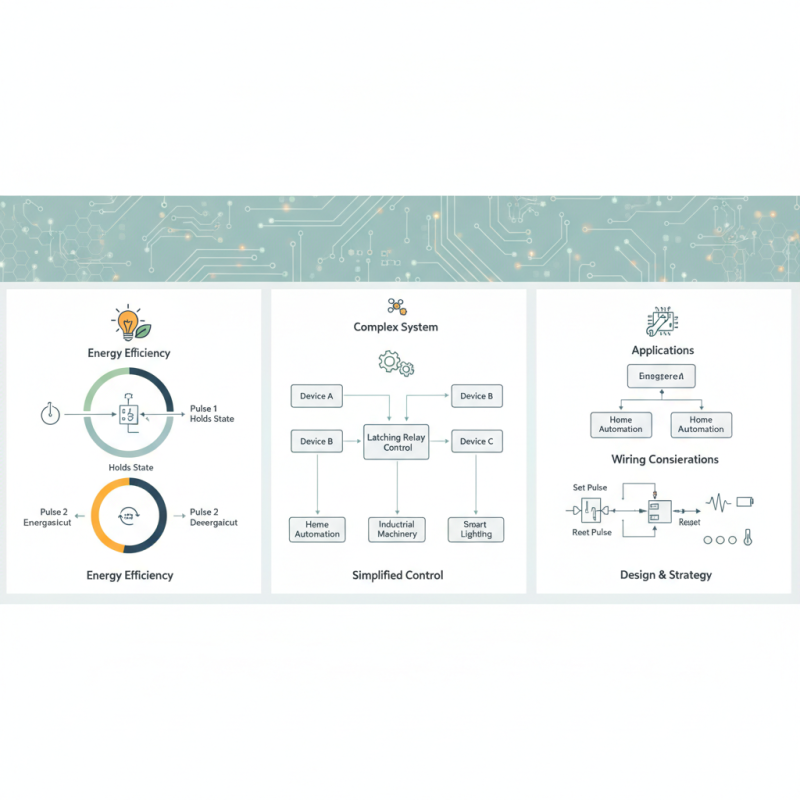
In modern electrical systems, efficient circuit control is paramount for both energy conservation and operational reliability. One of the most effective components for achieving this is the Latching Relay. Unlike traditional relays that require continuous power to maintain their position, a Latching Relay utilizes a unique mechanism that allows it to hold its state—either open or closed—without the need for constant power supply. This characteristic not only enhances energy efficiency but also simplifies the control of various devices in complex systems.
The principle behind the Latching Relay is straightforward yet ingenious. When activated by a pulse of electricity, it switches to one of its two stable states, and it remains in that state until triggered again by another pulse. This ensures that circuits can be controlled with minimal energy consumption, making it an ideal choice for applications ranging from home automation to industrial machinery. In this guide, we will explore the various aspects of using a Latching Relay for effective circuit control, including practical applications, wiring considerations, and tips for optimal performance. By understanding how to effectively implement this technology, users can significantly enhance their circuit design and control strategies.
Understanding the Basics of Latching Relays in Circuit Control
Latching relays are powerful components in circuit control, known for their ability to maintain their circuit state even after the input power is removed. Unlike traditional relays, which require continuous power to stay activated, latching relays “latch” into their position until a second input signal is received. This characteristic not only enhances energy efficiency but also simplifies circuit design by reducing the need for constant power supply, making them ideal for applications in automation, security systems, and more.
Tips: When working with latching relays, it's important to carefully consider the input signals required to switch the relay. Properly configuring these signals ensures that the relay operates smoothly and prevents accidental resets. Additionally, selecting the right type of latching relay—be it electromagnetic or solid-state—based on your specific circuit requirements is essential for optimal performance.
Furthermore, integrating latching relays into your circuit can significantly reduce power consumption, especially in battery-operated devices. By leveraging their low-energy characteristics, you can extend the life of your batteries while maintaining reliable operation. Always be sure to follow manufacturer specifications and guidelines to ensure safe and effective use of latching relays in your projects.
Types of Latching Relays and Their Applications in Electronics
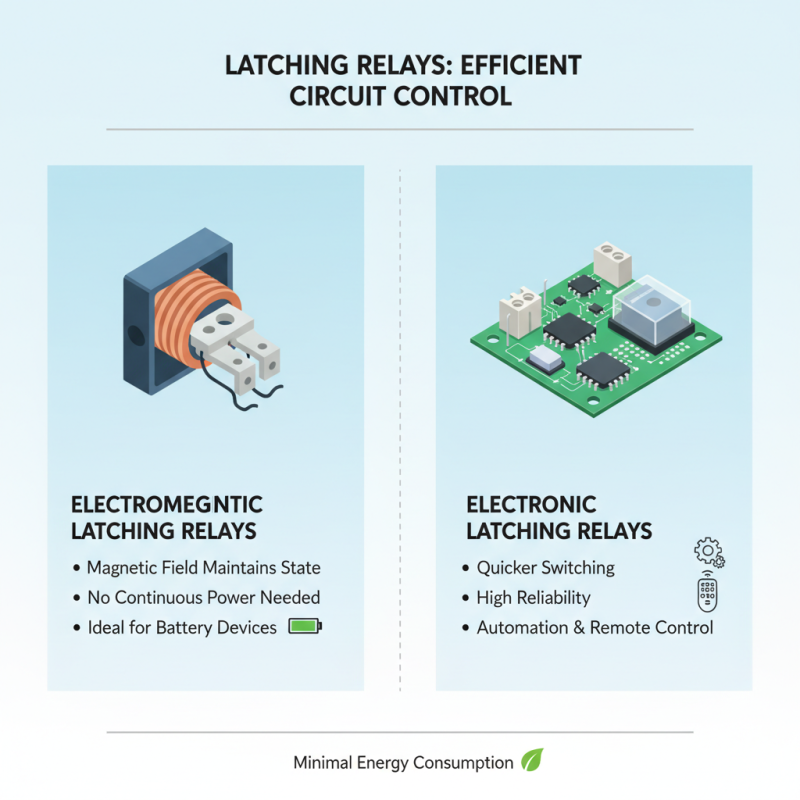
Latching relays are integral components in modern electronic applications, offering efficient control over circuits with minimal energy consumption. There are primarily two types of latching relays: electromagnetic and electronic. Electromagnetic latching relays use a magnetic field to maintain their state, allowing them to hold their position without continuous power, making them ideal for battery-operated devices. On the other hand, electronic latching relays facilitate quicker switching and are often utilized in automation systems and remote control setups due to their high reliability and reduced wear on mechanical parts.
According to a recent report by Market Research Future, the global latching relay market is projected to grow at a CAGR of 5.6% from 2021 to 2027, driven by advancements in the automotive and telecommunications sectors. These relays are widely applied in applications such as HVAC systems, where their ability to reduce energy expenditure while switching states is crucial. Additionally, in lighting automation, latching relays can significantly minimize energy costs by effectively managing lighting circuits with minimal power requirements, which aligns with the growing emphasis on energy efficiency in both residential and commercial buildings. As the demand for smart technologies continues to rise, latching relays will play a pivotal role in enhancing the efficiency and functionality of various electronic systems.
Advantages of Using Latching Relays for Energy Efficiency
Latching relays represent a substantial advancement in energy efficiency for circuit control applications. Unlike traditional relays that require a continuous power supply to maintain their position, latching relays operate on a principle that allows them to retain their state without constant input. This characteristic significantly reduces power consumption, making them an ideal choice for energy-conscious designs. By engaging and disengaging circuits through pulse signals, latching relays minimize wasted energy and decrease the overall load on the electrical system.
Moreover, the inherent design of latching relays supports a variety of applications where being energy efficient is paramount. For instance, in automated lighting systems, these relays can effectively control lighting states without the need for continual power draw. This functionality not only enhances energy savings but also contributes to increased reliability of the system.
Additionally, latching relays can lead to longer life spans for components within electronic systems due to reduced thermal stress and lower wear and tear, further affirming their role as a sustainable solution in circuit control.
Step-by-Step Guide to Wiring Latching Relays in a Circuit
Wiring a latching relay in a circuit can enhance your control over different electrical devices, allowing them to maintain their states even after the control signal is removed. To begin, you’ll need to gather essential components such as the latching relay, a power source, and the load that you wish to control. First, identify the relay's terminals: typically, there will be a pair for the coil and another pair for the load connections.
Start by connecting the power supply wires to the relay’s coil terminals. Ensure that the voltage matches the relay specifications to avoid damage.
Next, connect the load across the designated contacts of the relay. This will allow the relay to complete the circuit and turn the device on or off depending on the relay's state. One key aspect of such a setup is the push-button switch used to toggle between states. Wire the switch so that pressing it sends a pulse to the relay’s coil, causing it to switch states.
In a typical configuration, a momentary push activates the relay, keeping the load powered until the circuit is interrupted, either by another push on the button or a cut in power.
Be mindful of safety precautions during this process and ensure all connections are secure to prevent short circuits.
Common Troubleshooting Tips for Latching Relay Installation and Use
When installing a latching relay, it’s essential to ensure that the connections are secure and correctly aligned. Loose wires can lead to intermittent issues where the relay may not latch or unlatch properly. Always double-check the wiring against the circuit diagram before powering up the system. Additionally, using appropriately rated connectors and ensuring that they are free from corrosion or damage will greatly enhance the reliability of the installation.
Another common troubleshooting tip is to verify the control signals provided to the relay. Latching relays require a specific sequence of pulses to operate correctly. If the control signals are inconsistent or not reaching the relay, it may fail to engage. Utilizing a multimeter to check for proper voltage levels at the relay terminals can help identify any potential issues within the control circuit. Furthermore, if the relay does not respond as expected, it’s wise to inspect the relay itself for any signs of mechanical failure or electrical shorts, which can impede its functionality.
How to Use a Latching Relay for Efficient Circuit Control - Common Troubleshooting Tips for Latching Relay Installation and Use
| Dimension |
Specification |
| Relay Type |
Latching Relay |
| Coil Voltage |
12V DC |
| Contact Configuration |
SPDT (Single Pole Double Throw) |
| Current Rating |
10A @ 250V AC |
| Typical Applications |
Home Automation, Industrial Equipment |
| Common Issues |
Contact Welding, Insufficient Coil Voltage |
| Troubleshooting Tips |
Check connections, Inspect coil for damage |