Top 5 Best Vanadium Redox Flow Battery Solutions for Energy Storage?
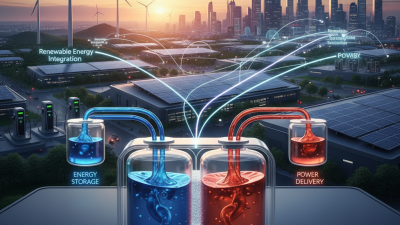
In recent years, energy storage has become a pivotal concern. Among various solutions, the Vanadium Redox Flow Battery stands out. This technology offers unique advantages in utility-scale applications. It allows for long-duration energy storage, making it suitable for renewable energy integration.
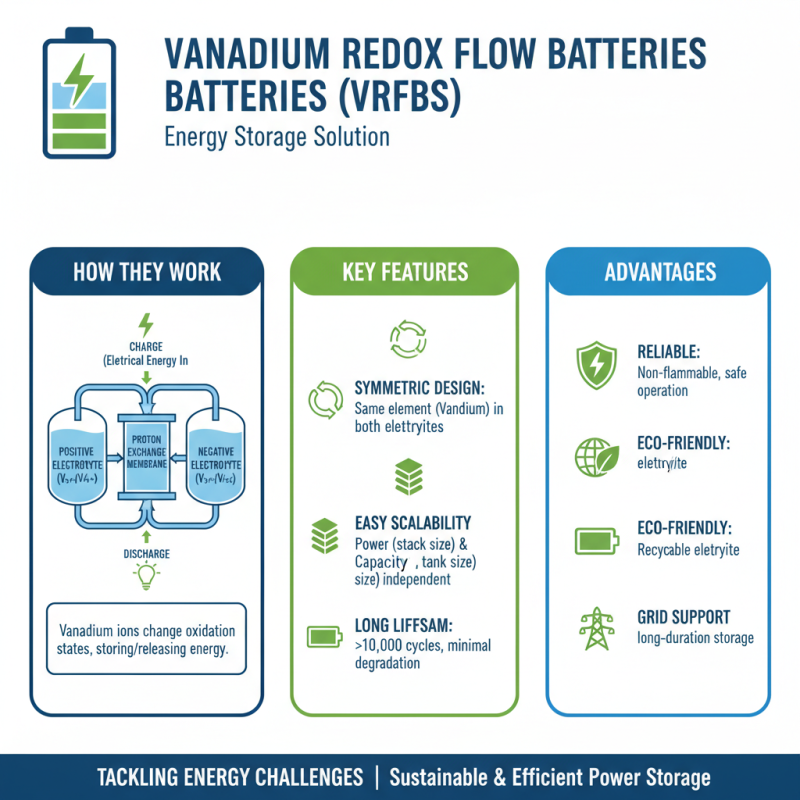
The Vanadium Redox Flow Battery operates by using vanadium ions in different oxidation states. It can handle large amounts of energy while maintaining safety. This characteristic sets it apart from conventional batteries. However, not all Vanadium Redox Flow Battery systems are created equal. Some face efficiency and cost challenges that require attention.
Exploring the top five solutions reveals significant variations. Each solution addresses specific needs and market segments. It’s important to analyze their performance, scalability, and economic viability. This analysis will help determine which Vanadium Redox Flow Battery solutions truly excel. In the evolving energy landscape, learning from past implementations is crucial. Finding the right balance between performance and cost remains essential for wider adoption.

Overview of Vanadium Redox Flow Batteries and Their Importance
Vanadium redox flow batteries (VRFBs) are gaining attention in the energy storage sector. These systems stand out for their ability to provide long-duration power. They use vanadium ions to store energy in two liquid electrolyte solutions. This design allows for easy scalability and flexibility in various applications.
The growing demand for renewable energy necessitates effective storage solutions. VRFBs can stabilize the grid by storing excess energy generated during peak production times. This feature is vital as renewable sources often produce variable outputs. However, VRFB technology is not without challenges. High initial costs and the need for ongoing research could hinder broader adoption.
Despite these issues, the importance of VRFBs is evident. They offer the potential for improved energy management in a sustainability-focused world. As more efforts are put into optimizing their performance, VRFBs may emerge as a cornerstone in future energy systems. The path forward remains complex, but this technology can significantly impact how we store energy.
Top 5 Best Vanadium Redox Flow Battery Solutions for Energy Storage
This chart represents key performance indicators of vanadium redox flow batteries, illustrating their energy capacity, efficiency, cycle life, response time, and cost per kWh. These metrics are crucial for understanding the viability and competitiveness of vanadium-based energy storage solutions in the renewable energy sector.
Key Features of Top Vanadium Redox Flow Battery Solutions
Vanadium redox flow batteries (VRFBs) are gaining attention in energy storage solutions. They have unique features that set them apart. One major advantage is their long cycle life. Data shows that VRFBs can last over 10,000 cycles. This longevity reduces replacement costs. In addition, VRFBs have a scalable design. Their storage capacity can easily increase by adding more tanks.
Performance stability is another key feature. VRFBs maintain output over time, even under varying loads. A recent report highlighted that VRFBs can operate efficiently at temperatures as low as -20°C. This adaptability makes them suitable for different environments. However, manufacturing costs can be high. Initial investment may deter some users. It's essential to weigh long-term benefits against upfront costs.
Tips: Consider your energy storage needs carefully. VRFBs excel in large-scale applications. However, they might not be ideal for smaller systems. Always evaluate the specific requirements of your project. Focus on operational longevity and efficiency when selecting a solution. Remember, VRFB technology is still evolving. Challenges remain, such as cost reductions and material sourcing.
Comparative Analysis of Leading Vanadium Redox Flow Battery Brands
Vanadium redox flow batteries (VRFBs) have gained traction for their ability to store and release energy efficiently. These systems store energy in liquid electrolyte solutions containing vanadium ions. Their longevity and scalability make them ideal for renewable energy applications. Many manufacturers compete in this market, each with unique features and advantages.
While some brands offer high energy density, others prioritize cost effectiveness. Factors such as charge/discharge efficiency and operational lifespan are critical. Yet, inconsistencies in performance data can complicate comparisons. Some batteries claim long cycles, but real-world testing shows varied outcomes. The differences in electrolyte composition also affect performance under different environmental conditions.
Selecting the suitable VRFB system requires careful consideration. Not all systems may perform equally in various applications or locations. Users should evaluate their specific needs, such as capacity and installation requirements. Despite advancements, VRFB technology continues to evolve, presenting opportunities for improvement. There's room to optimize energy output and reduce costs further.
Top 5 Best Vanadium Redox Flow Battery Solutions for Energy Storage
| Feature |
Solution 1 |
Solution 2 |
Solution 3 |
Solution 4 |
Solution 5 |
| Energy Capacity (kWh) |
400 |
500 |
750 |
600 |
800 |
| Power Rating (kW) |
100 |
150 |
200 |
180 |
300 |
| Cycle Efficiency (%) |
80 |
85 |
82 |
84 |
88 |
| Round-trip Efficiency (%) |
75 |
78 |
76 |
77 |
80 |
| Lifetime (years) |
20 |
25 |
20 |
22 |
30 |
| Cost ($/kWh) |
150 |
145 |
170 |
160 |
140 |
Innovative Technologies in Vanadium Redox Flow Battery Designs
Vanadium redox flow batteries (VRFBs) are gaining traction in energy storage. Their unique design features help tackle energy challenges. These batteries use vanadium ions in both positive and negative electrolytes. This symmetry allows for efficient energy storage and easy scalability.
Innovative technologies in VRFB design are reshaping the landscape. One notable advancement is the improvement in membrane materials. These membranes enhance ion conductivity while reducing crossover. Enhanced energy density is another critical focus. Researchers are experimenting with various electrolytes to optimize performance.
Despite these advancements, challenges remain. The cost of materials can be high, impacting widespread adoption. Moreover, the system's complexity may deter some users. Addressing these issues is crucial for the future of VRFB technology. As scientists continue to refine designs, the potential for greater efficiency grows. The path ahead holds promise, yet requires thoughtful exploration.
Case Studies of Successful Implementations and Applications
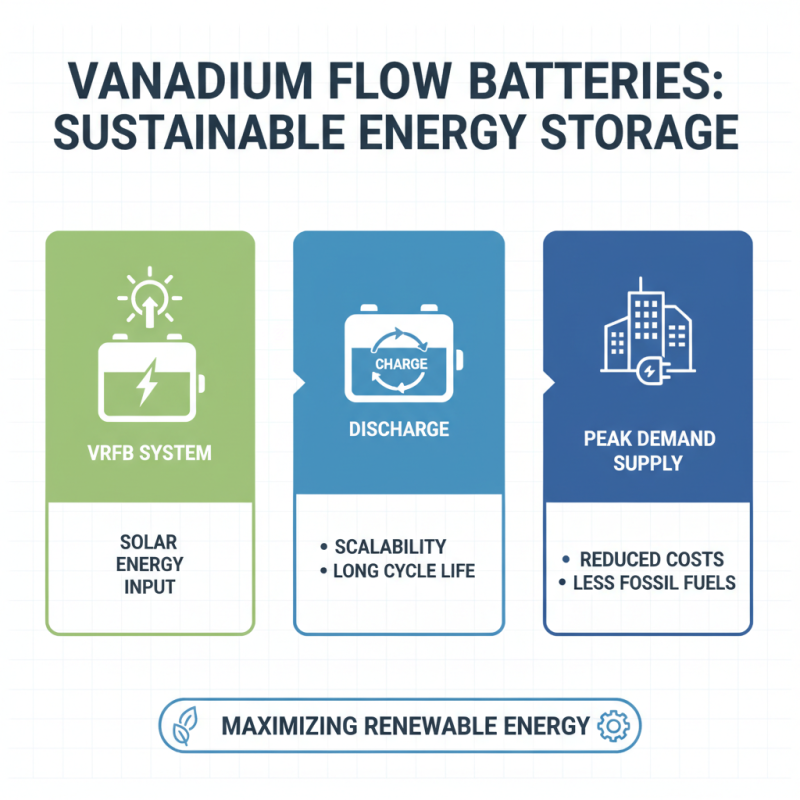
Vanadium redox flow batteries are emerging as pivotal solutions for energy storage. Their unique chemistry allows for scalability and long cycle life. In one notable case, a facility implemented their system to maximize renewable energy use. By storing excess solar energy, they ensured a steady supply during peak demand periods. This approach not only reduced operational costs but also diminished reliance on fossil fuels.
However, challenges remain. The initial setup costs can be high. Some facilities struggled to find financing for large systems. Others faced issues related to system maintenance. While the benefits are clear, these obstacles require thoughtful planning. Data from various implementations show a learning curve involved. As more organizations share their experiences, future projects can become more efficient.
Another example features a university campus that deployed a vanadium redox flow battery. Their goal was to enhance energy resilience. By integrating with existing systems, they could provide backup power during outages. Yet, they encountered integration challenges with their infrastructure. Feedback from these experiences will shape future designs. Overall, the journey of adopting these batteries highlights both potential and areas needing improvement.