Why Choose Rechargeable Lithium Batteries for Your Devices?
In today's fast-paced tech world, the importance of energy storage cannot be overstated. Rechargeable Lithium Batteries have emerged as the preferred choice. According to industry reports, the global rechargeable battery market is expected to surpass $120 billion by 2026. This growth highlights the shift towards more sustainable energy solutions.
Rechargeable Lithium Batteries offer significant advantages over traditional battery options. They provide higher energy density and longer life cycles. For instance, they can recharge over 2,000 times compared to just several hundred for alkaline batteries. However, the production of these batteries raises environmental concerns. While they are efficient, the extraction of lithium has ecological impacts that warrant reflection.
Despite these challenges, the advantages often outweigh the drawbacks. Devices powered by Rechargeable Lithium Batteries benefit from reduced long-term costs and lower environmental impact when disposed of properly. Users must consider both the immediate benefits and the long-term implications for their devices and the planet. The decision to choose these batteries is not just about performance; it is also about making responsible choices for the future.

Understanding the Basics of Rechargeable Lithium Batteries
Rechargeable lithium batteries are becoming the go-to choice for many electronic devices. They are favored for their energy density and longevity. Reports indicate that lithium-ion batteries offer a specific energy of about 150-200 Wh/kg. This means devices can run longer on a single charge, enhancing user experience.
These batteries also have a lower self-discharge rate. While alkaline batteries lose about 10% of their charge monthly, lithium models lose only about 2-3%. This can be critical for devices like remote controls or emergency flashlights, which may sit unused for long periods. However, improper usage can lead to reduced efficiency or even safety concerns, highlighting the need for user education.
Some studies predict that by 2025, the market for lithium batteries will grow by over 25%. Yet, despite their advantages, many consumers still hesitate. There’s confusion about the correct charging practices. Overcharging can damage battery life. Users must be mindful and follow best practices to get the most from these innovative power sources.
Advantages of Using Rechargeable Lithium Batteries in Devices
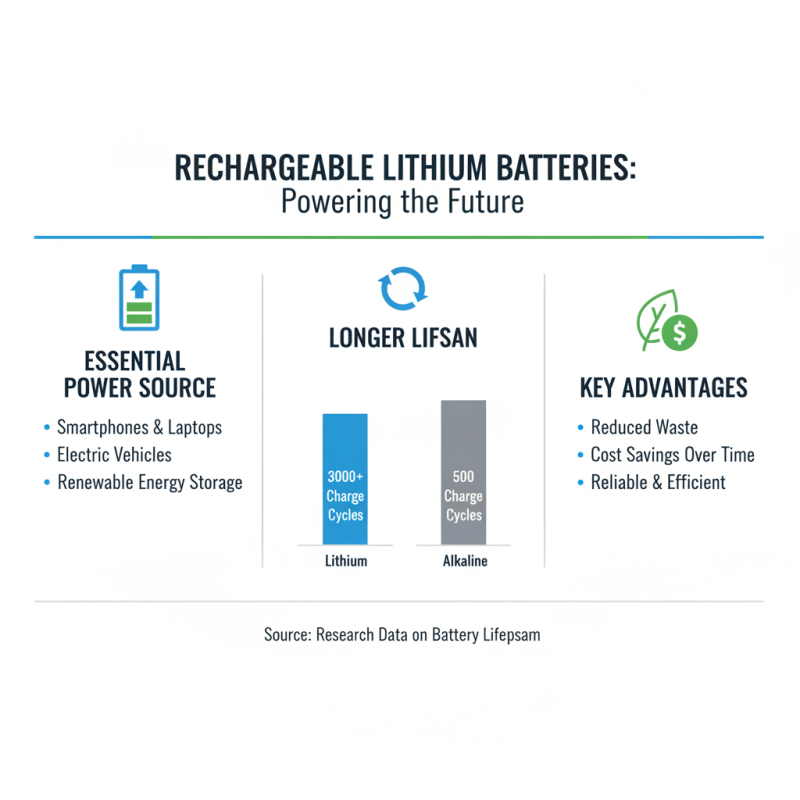
Rechargeable lithium batteries have become an essential power source for many devices. Their popularity is growing due to several compelling advantages. For instance, they can last significantly longer than traditional alkaline batteries. In fact, research shows that lithium batteries offer up to 3000 charge cycles, compared to only around 500 cycles for many disposable options. This durability reduces waste and offers savings over time.
One major perk of lithium batteries is their energy density. They can store more energy in a smaller size. Studies indicate that they hold nearly three times the energy of alkaline batteries of the same weight. This feature allows for lighter and more compact designs in gadgets. However, users should be aware that improper charging or extreme temperatures can diminish their lifespan.
Tips: When charging, avoid overcharging to enhance battery longevity. Also, consider using a dedicated charger designed for lithium batteries. Store them in a cool, dry place to maintain performance. Remember, while they have many advantages, lithium batteries also require careful handling. A bit of caution can go a long way in maximizing efficiency and safety.
Environmental Impact of Choosing Lithium Batteries Over Disposable Ones
The choice of rechargeable lithium batteries is significant. They help reduce the number of disposable batteries ending up in landfills. Each disposable battery can take decades to decompose. In contrast, lithium batteries can be reused hundreds of times before needing to be recycled.
Environmental scars from disposable batteries are alarming. Heavy metals in these batteries can leak into the soil and water. This contamination harms wildlife and ecosystems. While rechargeable batteries still require careful disposal, their impact is less severe. They produce fewer toxins, making them a better option overall.
Switching to rechargeable lithium batteries is a step towards a greener future. Many people still depend on single-use batteries. Awareness is vital here. We need to encourage responsible usage and recycling practices. Every small change can lead to a more sustainable planet. The shift may seem daunting, but it’s worth considering.
Why Choose Rechargeable Lithium Batteries for Your Devices? - Environmental Impact of Choosing Lithium Batteries Over Disposable Ones
| Aspect |
Rechargeable Lithium Batteries |
Disposable Batteries |
| Lifespan |
Up to 2000 charges |
Single use, varies (typically around 1-2 hours) |
| Environmental Impact |
Lower due to reduced waste |
Higher due to frequent disposal |
| Cost Over Time |
Lower overall cost |
Higher cost with repeated purchases |
| Performance |
Consistent power output |
Declines quickly after depletion |
| Recyclability |
Highly recyclable |
Limited recycling options |
Comparative Analysis: Lithium Batteries vs. Other Rechargeable Options
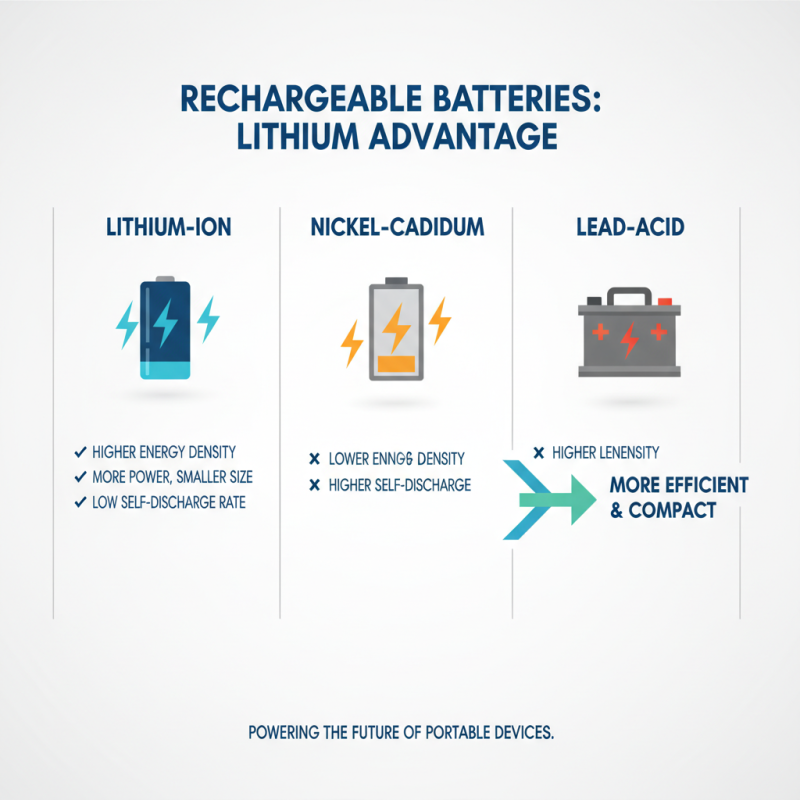
When it comes to rechargeable batteries, lithium batteries stand out for several reasons. Unlike nickel-cadmium or lead-acid batteries, lithium batteries offer a higher energy density. This means they store more power in a smaller size. Devices can be lighter and more compact. Additionally, lithium batteries have a lower self-discharge rate. This means they retain their charge better when not in use.
However, not everything is perfect. Lithium batteries may not perform as well in extreme temperatures. Cold can reduce their effectiveness. There is also the concern of battery lifespan. While they last longer than many alternatives, they still degrade over time. Certain alternatives, like nickel-metal hydride, may serve better in high-drain devices. Yet, they generally have lower capacities and shorter cycles.
In daily use, a balance is essential. Users may prefer the lightweight and compact design of lithium batteries. But they must also consider environmental factors and disposal issues. Each type has its pros and cons. Ultimately, the choice depends on specific device needs and usage habits.
Best Practices for Maintaining and Maximizing Battery Life
Rechargeable lithium batteries are becoming essential for modern devices. Their efficiency and sustainability are unmatched. However, maximizing their life requires attention to detail.
Here are some tips to help you maximize battery longevity. Always store batteries in a cool environment. Extreme heat can damage their cells. Avoid letting them fully discharge. It’s better to recharge when they reach about 20%. Studies have shown that maintaining a 20-80% charge can extend battery lifespan significantly.
Regular cleaning of battery terminals is often overlooked. Dust and dirt can inhibit performance. A quick wipe with a dry cloth can help. Moreover, users should be mindful of how frequently they charge. Frequent, shallow charges can be detrimental. Aim for thorough cycles instead. Reflecting on these practices may seem tedious, yet they are crucial for optimal use.
Battery Lifespan Comparison: Rechargeable Lithium vs. Alkaline Batteries
Rechargeable lithium batteries can last up to 500 cycles, while traditional alkaline batteries average only about 5 cycles. This demonstrates the cost-effectiveness and environmental benefits of using rechargeable batteries, as they can be charged multiple times without needing to be replaced frequently.