As RV enthusiasts seek the ultimate travel experience, the choice of battery becomes crucial. Lithium RV batteries have gained popularity for their durability and efficiency. "Choosing a Lithium RV Battery can transform your adventures," says John Smith, a leading expert in RV power solutions.
These batteries provide reliable power for all your camping needs. Unlike traditional lead-acid batteries, lithium options are lighter and last longer. They charge quickly and perform well in various conditions, which is vital during outdoor adventures. Many users struggle with battery weight and performance issues. Lithium RV batteries, however, make life easier.
Despite their benefits, some still hesitate. Concerns about initial costs often arise. Yet, the long-term savings and efficiency can outweigh these worries. Investing in a Lithium RV Battery means more joy and less worry on your trips. The choice ultimately shapes your adventures, making it worth considering.

When planning your next RV adventure, a lithium battery can be a game changer. These batteries are known for their lightweight design and high energy density. They can store more power in less space compared to traditional lead-acid batteries, making them ideal for RV use. According to industry data, lithium batteries can provide nearly twice the usable power of comparable lead-acid options.
Using a lithium battery not only enhances your RV experience but also improves longevity. These batteries can last up to 10 years, significantly outpacing their counterparts, which usually only last around 3-5 years. This translates to long-term savings and less environmental waste. Additionally, lithium batteries charge faster, often taking only a few hours to reach full capacity, while traditional batteries may take a day or more.
Tips: Consider the capacity you'll need. Calculate your energy usage to determine how many amp-hours you'll require. Also, pay attention to the discharge rate. A battery with a high discharge rate can power your appliances more effectively. Lastly, ensure your RV's charging system is compatible with lithium technology; this can prevent potential performance issues.
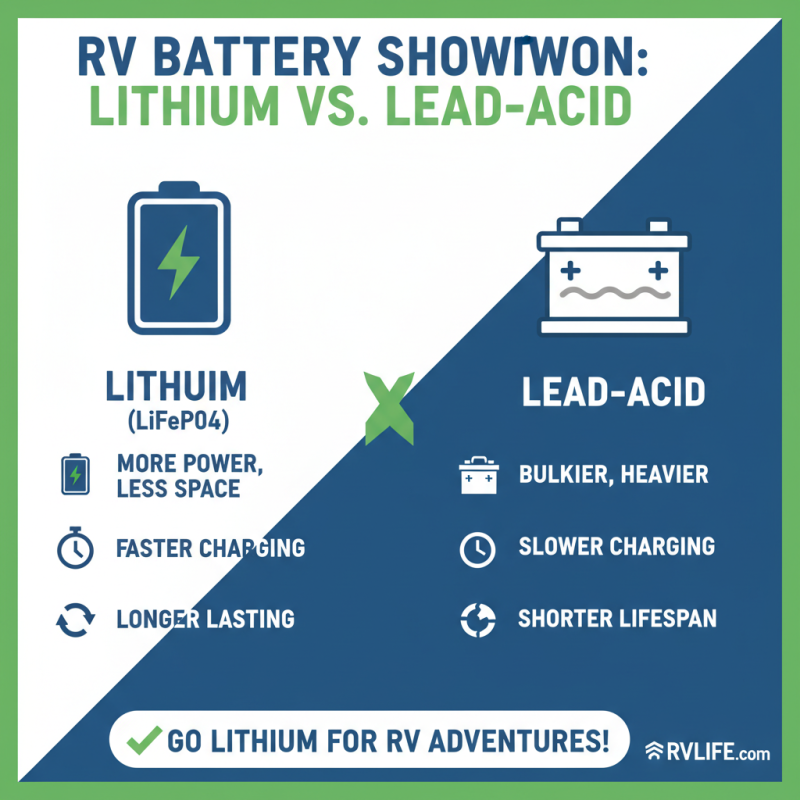
Lithium RV batteries are transforming the way we power our adventures. They use advanced lithium-ion technology, which provides higher energy density compared to traditional lead-acid batteries. This means that a smaller battery can deliver more power. Travelers often notice that lithium batteries are lighter, making them easier to handle. Their compact size allows for better space management in RVs.
One of the key benefits is longevity. Lithium batteries last significantly longer than conventional types. They can endure many more charge cycles, often exceeding 2,000 cycles. However, their initial cost can be intimidating for some. Still, many consider it a worthwhile investment in the long run. The charging speed is another area where lithium excels. It charges quickly and efficiently, allowing for more time spent enjoying the great outdoors. Yet, users must be aware that improper charging can lead to reduced lifespan.
Safety is an important consideration. Lithium batteries come equipped with built-in protection systems, but they are still at risk if not handled properly. They can be sensitive to extreme temperatures. Careful monitoring is essential to prevent issues. Overall, understanding the technology behind lithium RV batteries offers valuable insights into their many benefits. Travelers can enjoy more freedom and flexibility while on the road.
When it comes to choosing a battery for your RV, lithium batteries stand out against traditional lead-acid options. They offer a superior energy density, which means they take up less space while providing more power. This can be crucial on long adventures where space is limited. Also, lithium batteries charge faster, which allows for less downtime during your trips.
However, it’s important to note that lithium batteries are generally more expensive upfront. This cost can be a hurdle for many RV enthusiasts. You might find yourself questioning if the initial price is worth the long-term benefits. Maintenance also differs; lithium batteries require specific charging protocols. Failing to follow these can lead to performance issues.
On the other hand, lead-acid batteries may be heavier and less efficient, but they are often easier to manage for some users. Many are familiar with their properties, and their initial cost is lower. This makes them appealing, especially for first-time RV owners. Ultimately, the choice between lithium and lead-acid batteries rests on your preferences and adventure style. Consider what matters most for your travels.
When it comes to RV adventures, weight and space are crucial factors.
Lithium RV batteries stand out for their
compact size and lightweight construction. This means more room for your gear and less weight to haul around.
Imagine having a larger space for your camping equipment or even an extra cooler for food. The opportunity to
carry more supplies can enhance your outdoor experience significantly.
Lithium batteries also offer higher energy density. For every pound you save,
you gain in efficiency. This translates to longer trips without the need for frequent recharges. Yet, it's essential
to consider that not all lithium batteries perform equally under diverse conditions. Users may encounter
temperature sensitivity, affecting performance. Understanding how to manage
these situations allows for a better experience. By maximizing storage and minimizing weight, lithium batteries
can elevate your travels.
Lithium RV batteries significantly outperform traditional lead-acid batteries in lifespan and durability. Lithium batteries can last up to 10 years, compared to only 3 to 5 years for lead-acid options. This remarkable longevity reduces the need for frequent replacements, saving money and effort over time. In addition, lithium batteries maintain their performance better under varying temperatures, ensuring reliability during all adventures, from sweltering summers to frigid winters.
Another compelling factor is their ability to withstand deep discharge cycles. Research shows that lithium batteries can handle over 3,000 charge cycles at 80% depth of discharge. In contrast, lead-acid batteries typically endure only about 500 cycles under similar conditions. This durability translates to less wear and tear, providing peace of mind when traveling in remote areas. However, the environmental impact of battery disposal still poses questions, as lithium's recycling rate is much lower than that of lead-acid batteries, prompting further reflection on sustainability.
Furthermore, while lithium batteries are lighter and more efficient, their initial cost can be daunting. This may require careful budgeting for some RV owners. It's essential to weigh the upfront investment against the long-term benefits. Making informed decisions now can lead to greater satisfaction and adventure down the road.
Choosing a Lithium RV Battery for your next adventure offers numerous advantages that enhance your travel experience. These advanced batteries utilize cutting-edge technology, providing significant benefits over traditional lead-acid batteries, such as improved weight and space efficiency. Lithium RV batteries are lighter and more compact, allowing for better vehicle handling and maximized storage.
Additionally, these batteries boast a longer lifespan and remarkable durability, ensuring that your power source will last through many trips. Their robust performance and reliability make them an ideal choice for RV enthusiasts. Environmental considerations also play a crucial role, as lithium technologies are often more sustainable, reducing the ecological footprint of your travels. Embracing a Lithium RV battery means opting for a smarter, greener, and more efficient way to power your adventures.