What Are the Top Types of Miniature Circuit Breakers?
Miniature Circuit Breakers (MCBs) protect electrical circuits when overloads or short circuits occur. Choosing the right type matters: a breaker that trips too easily can interrupt everyday equipment, while one that is poorly matched to the circuit may not provide suitable protection. The details on the device label—such as rated current and trip curve—are not decoration. They help determine whether an MCB suits a lighting circuit, a motor load, or another application.
This guide compares common MCB types, including B, C, and D trip curves, and explains how their different response characteristics affect practical selection. A B-curve breaker is commonly used for circuits with lower inrush currents; C and D curves may suit loads with higher starting currents, subject to the circuit design and manufacturer’s specifications. The label alone is not enough. Cable size, expected fault current, and installation conditions also matter.
A useful rule of thumb: match the breaker to the circuit, not just the appliance. As no source material or verifiable expert quotation was provided, I won’t invent a named specialist’s quote. That limitation matters. This introduction can still set up a clear comparison, but final selection should be checked against product documentation and by a qualified electrical professional. One small detail can change the decision: a motor that briefly draws extra current at startup may need a different trip curve from a simple lighting circuit.
How Miniature Circuit Breakers Are Classified
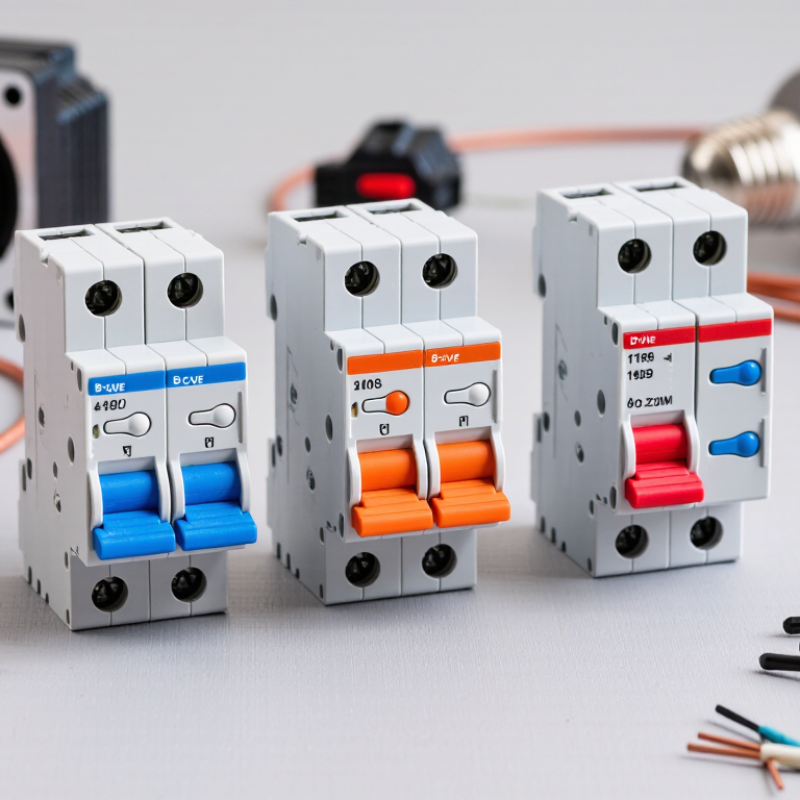
Miniature circuit breakers are classified in several ways, not just by their physical size. Common categories include pole count, rated current, tripping curve, and breaking capacity. Pole count describes how many conductors the breaker can disconnect together. A single-pole unit typically protects one circuit conductor, while multi-pole designs can link switching across several conductors. The exact arrangement depends on the electrical system.
Tripping curves describe how quickly a breaker responds to a surge. Type B devices generally trip at lower multiples of rated current than Type C devices; Type D devices tolerate higher brief inrush currents. These labels help match protection to loads, but they are not a substitute for checking equipment specifications.
Breaking capacity matters too: it indicates the maximum fault current the breaker is designed to interrupt safely. Details matter. A breaker with the wrong rating may not provide suitable protection, even if it fits the panel.
Tips: Read the markings on the breaker and compare them with the circuit design. Check pole count, current rating, curve, and breaking capacity. If a label is unclear, don’t guess; ask a qualified electrician to verify the selection. I can see how these categories blur together, especially when several ratings appear on one small label.
Type B MCBs for Low-Inrush Circuits
Type B MCBs suit low-inrush circuits such as LED lighting, socket circuits, and small resistive appliances. Their magnetic trip range is comparatively sensitive. IEC 60898-1:2015+A1:2019 specifies instantaneous tripping between 3 and 5 times rated current for Type B breakers.
For a 10 A breaker, that means approximately 30–50 A. This range can help clear faults promptly without nuisance trips from modest startup surges. A sudden blackout is still inconvenient.
Selection needs circuit evidence, not just a breaker label. Check cable capacity, expected load, fault-loop impedance, and equipment startup current; nameplate current alone may miss a brief surge. Type B may trip when a motor or transformer starts, even if its steady load seems small. Consult the breaker’s published trip curve and verify coordination with upstream protection. IEC test ranges do not predict every installation’s behavior. Field measurements matter. There is no perfect shortcut.
Type C MCBs for General-Purpose Circuits
Type C miniature circuit breakers suit general-purpose circuits with moderate starting surges. Their magnetic trip mechanism responds at roughly five to ten times rated current, according to IEC 60898-1, the international standard for household and similar circuit breakers. This range helps tolerate brief inrush from fluorescent lighting, small pumps, or workshop tools without nuisance tripping. A useful buffer. Thermal protection still responds to sustained overloads, so a Type C device is not simply “less sensitive” in every situation.
Consider a small pump starting in a utility room: its brief motor surge may exceed normal running current, while a fault should still trigger rapid disconnection. The curve alone cannot confirm safety. The selected rating must also suit conductor capacity, prospective fault current, and the installation’s disconnection requirements. Electrical design guidance commonly stresses checking these conditions together; IEC 60898-1 provides the relevant trip-band reference. That detail is easy to miss. A Type C breaker can be unsuitable where available fault current is low or cable protection is inadequate, even if the load seems ordinary. Verify the circuit conditions before choosing one.
Type D MCBs for High-Inrush Equipment
Type D MCBs are designed for circuits with strong, brief inrush currents. Their magnetic trip typically operates at around 10–20 times the rated current, depending on the device and applicable standard. This higher threshold can suit some motors, transformers, and equipment that draws a sharp current spike at startup. The thermal element still responds to sustained overloads. A Type D breaker is not simply a stronger all-purpose option.
Consider a small motor that briefly pulls several times its running current when switched on. A more sensitive breaker may trip during startup, while a Type D curve may tolerate that short surge. But the circuit must still disconnect safely during a fault. Check conductor size, expected fault current, trip times, and coordination with upstream protection. It is easy to focus only on nuisance trips. That can lead to poor choices. A higher trip threshold may not fit every installation.
Tips: Compare the equipment’s startup-current profile with the breaker’s trip curve, not just its rated amperage. Confirm the cable and fault conditions with a qualified electrical professional. If trips continue, investigate the cause before increasing the breaker rating. Sometimes the original assumption is wrong.
Comparing Trip Curves and Choosing the Right MCB
Miniature circuit breakers are often grouped by trip curve: B, C, and D. The curve describes how quickly the magnetic release responds to a brief surge. Thermal protection also responds to sustained overloads, usually with a delay. Two protections. Different jobs.
A Type B breaker typically trips magnetically at about three to five times its rated current. It can suit circuits with modest startup surges, such as lighting or general household loads. Type C commonly trips at five to ten times rated current, making it a frequent choice for equipment with moderate inrush, including small motors. Type D generally trips at ten to twenty times rated current and may suit loads with stronger startup surges. These ranges are typical, not a substitute for the specific breaker’s data sheet.
Choose a curve by checking the load’s startup current, conductor capacity, and available fault current. A motor that briefly draws several times its running current may trip a B curve unnecessarily. But moving to a D curve simply to stop nuisance trips can be unsafe if a fault cannot produce enough current for rapid disconnection. There is no perfect curve. Installation conditions matter, and I would not select one from the appliance label alone. A qualified electrician can verify protection and coordination against the circuit design and local requirements.
What Are the Top Types of Miniature Circuit Breakers? - Comparing Trip Curves and Choosing the Right MCB
| Trip Curve |
Instantaneous Magnetic Trip Range |
Typical Load Characteristics |
Common Applications |
Selection Considerations |
| B |
3–5 × rated current (In) |
Low inrush current; resistive or lightly inductive loads |
Residential lighting, heating circuits, and general-purpose circuits with modest startup current |
Often suitable where inrush is low. Confirm that the circuit’s prospective fault current and cable protection requirements are met. |
| C |
5–10 × rated current (In) |
Moderate inrush current |
Small motors, fluorescent lighting, and other circuits with moderate switching or startup surges |
A common choice for mixed loads. Check that the available fault current is sufficient for the selected device to disconnect within the required time. |
| D |
10–20 × rated current (In) |
High inrush current |
Loads such as transformers, certain motors, and equipment with substantial startup current |
Use only when high inrush would cause unwanted tripping on a more sensitive curve. Verify fault-loop conditions and disconnection times carefully. |
Notes: The magnetic trip ranges shown are the instantaneous operating bands specified for B, C, and D curves in IEC 60898-1. An MCB’s thermal element also provides inverse-time overload protection; the curve letter describes its magnetic trip characteristic, not its rated current or breaking capacity. Choose an MCB based on the load, cable rating, prospective fault current, and applicable local electrical rules.