What is Vanadium Redox Flow Battery and How Does It Work?
The Vanadium Redox Flow Battery (VRFB) represents a significant advancement in energy storage technologies. With growing emphasis on renewable energy, this battery type provides unique benefits. Dr. Emily Carter, a leading expert in energy systems, notes, "The VRFB offers scalability and longevity unmatched by other battery technologies."
Unlike traditional batteries, the VRFB stores energy in two liquid electrolytes, providing durability and efficiency. As renewable sources like solar and wind grow, the demand for effective storage solutions increases. VRFBs can easily scale up for large applications or down for smaller uses.
However, the technology comes with challenges. Cost and complexity can hinder widespread adoption. Ongoing research is critical to improve feasibility and lower prices. As we evaluate the role of the Vanadium Redox Flow Battery, we must balance optimism with realistic assessments of its drawbacks.
What is Vanadium Redox Flow Battery?
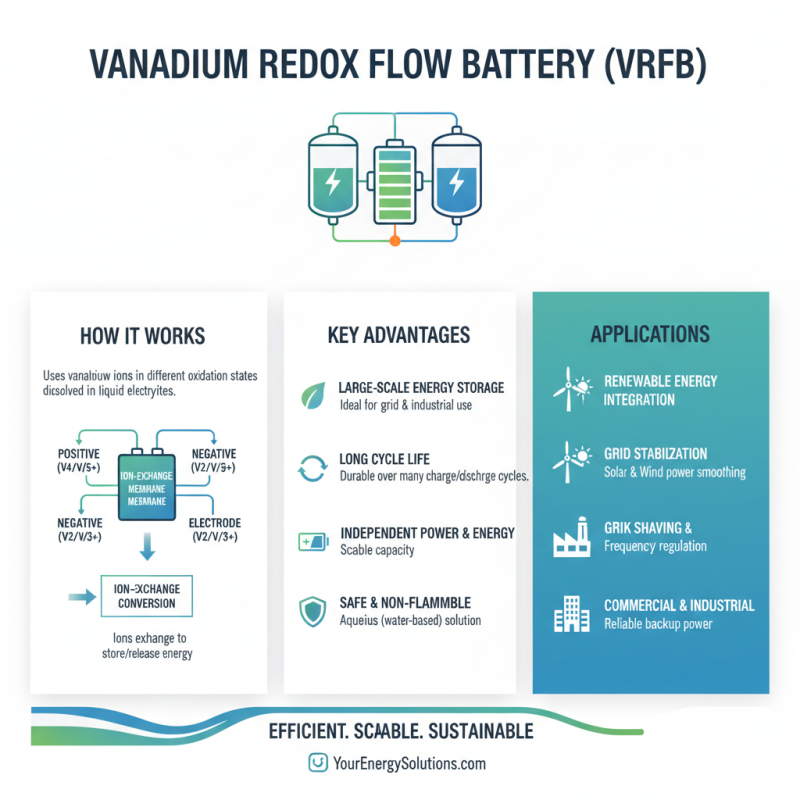
Vanadium Redox Flow Batteries (VRFBs) are a type of energy storage system designed for large-scale applications. They use vanadium ions in different oxidation states to store and release energy. This unique feature allows them to offer effective energy management, particularly for renewable energy sources.
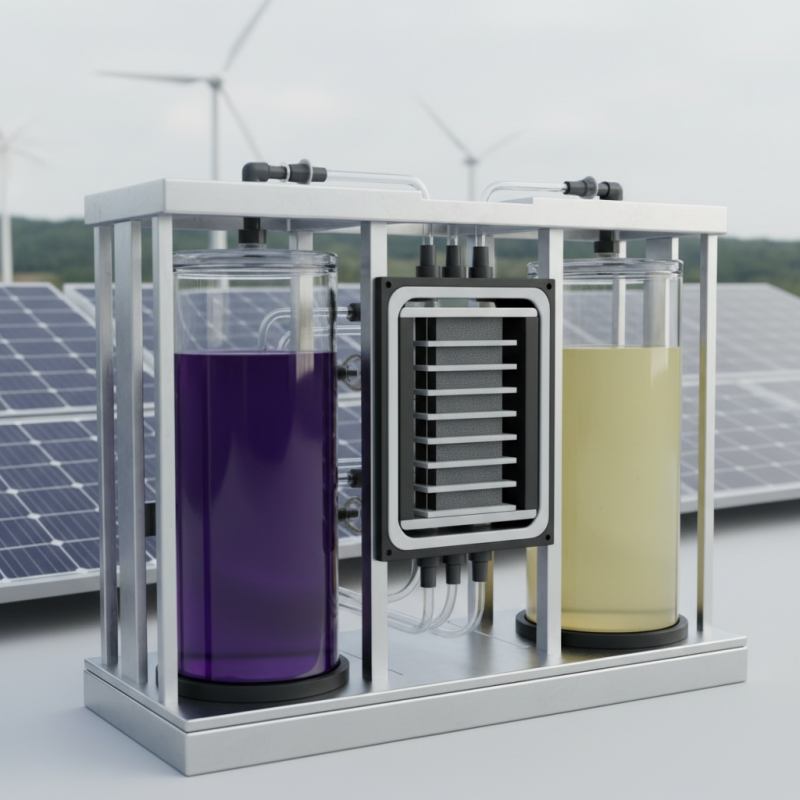
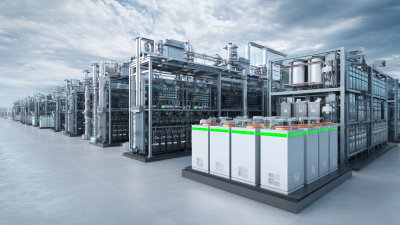
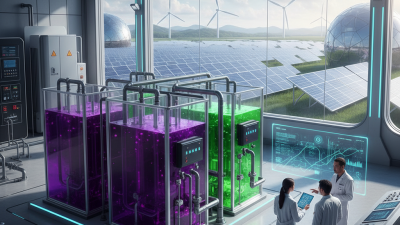
VRFBs consist of two electrolyte tanks, one containing the positive and the other the negative electrolyte. The design allows for the decoupling of power and energy. Therefore, the system can be scaled up easily by simply increasing the size of the electrolyte tanks. This flexibility makes VRFBs suitable for various applications, from grid storage to backup power for critical facilities.
Despite their advantages, VRFBs face challenges. The initial cost can be high, which may deter some users. Additionally, vanadium is less abundant than other materials used in battery technology. Therefore, ongoing research is vital to enhance their cost-effectiveness and efficiency. Continuous development could improve the adoption rates of these systems, addressing critical energy storage needs in the transition to sustainable energy supply.
Components of a Vanadium Redox Flow Battery System
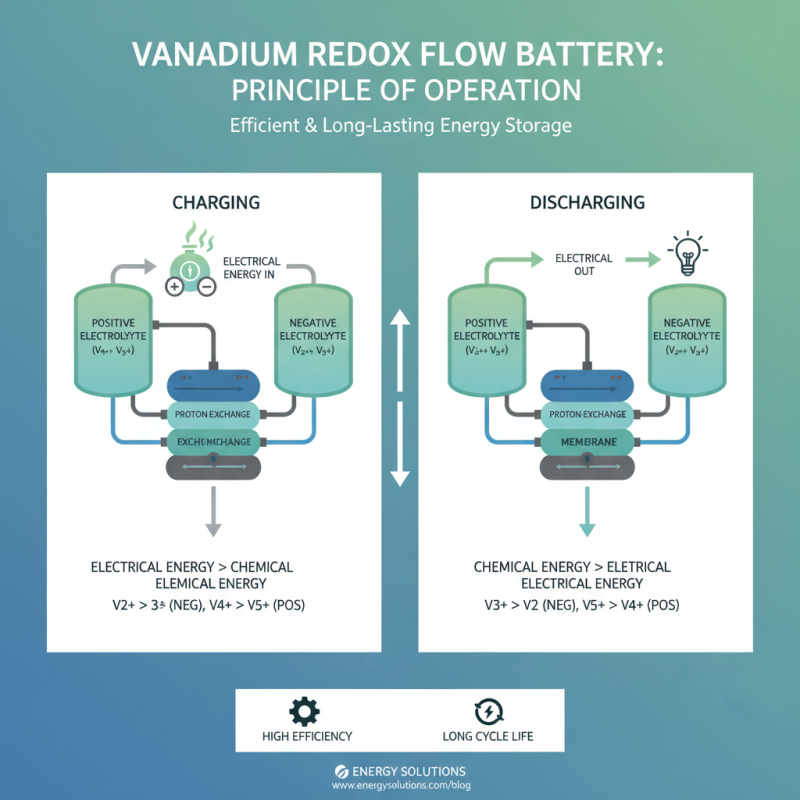
A Vanadium Redox Flow Battery (VRFB) consists of key components that define its operation. At the heart of the system are two electrolyte tanks. These tanks hold vanadium ions in different oxidation states. The separation allows for efficient energy storage and discharge without contamination.
The battery utilizes a membrane, typically a proton-exchange membrane, which plays a vital role in ion transfer. This membrane ensures that the two electrolyte solutions do not mix while allowing vanadium ions to flow through during charging and discharging cycles. Another important part is the bipolar plates, which facilitate the movement of ions and contribute to the overall efficiency.
Moreover, the pump system is essential for circulation. It maintains constant flow rates, allowing for balanced reactions and optimal energy performance. However, issues like pump failure can hinder efficiency. Some users report difficulties with the complexity of maintenance, underlining the need for expertise in handling these systems. The VRFB may not be perfect, but its design offers a robust solution for renewable energy storage challenges.
Vanadium Redox Flow Battery Operation Characteristics
Advantages of Vanadium Redox Flow Batteries
Vanadium redox flow batteries (VRFBs) offer several advantages that make them a compelling choice for energy storage. These systems utilize liquid electrolytes containing vanadium, allowing for efficient energy transfer and high energy density. The ability to decouple power and energy capacity is key. Larger tanks can store more energy, while the power output can remain stable and flexible. This means VRFBs can adapt to varying energy demands.
One notable advantage is their long cycle life. VRFBs can last for over 10,000 cycles. This durability translates to lower long-term costs. They also display good efficiency, typically around 70-80%. Despite these benefits, challenges exist. The cost of vanadium can fluctuate, impacting the overall system price. Additionally, while they are not as compact as lithium-ion batteries, many applications can afford the space for VRFBs.
Security is another vital aspect. VRFBs are non-toxic and fire-resistant. This makes them safer alternatives in many settings. Furthermore, they can store excess renewable energy. This supports the shift toward sustainable energy solutions. However, the technology is still evolving. Continuous research is necessary for optimizing these systems further. The potential for innovation remains vast.
Applications and Future of Vanadium Redox Flow Batteries
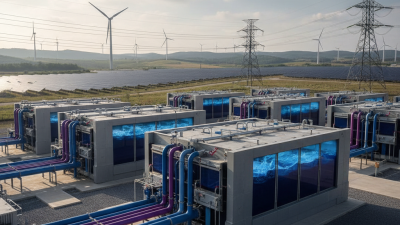
Vanadium redox flow batteries (VRFBs) are emerging as a promising energy storage solution. They provide several advantages for various applications, particularly in renewable energy integration. These batteries can store excess energy generated from solar or wind farms, helping to balance supply and demand. Their ability to maintain performance over numerous charge-discharge cycles makes them suitable for large-scale applications.
In commercial and industrial settings, VRFBs support grid stability and load shifting. They can deliver consistent power to facilities during peak usage times. This capability allows businesses to reduce energy costs significantly. Nonetheless, the technology does face challenges. High initial costs and the complexity of installation can deter wider adoption. Researchers are continuously exploring ways to optimize efficiency and reduce expenses.
The future of vanadium redox flow batteries looks hopeful. Continued advancements in technology may lead to improved energy density and reduced costs. Collaboration among researchers and industries is crucial to overcoming existing limitations. As VRFBs mature, they may play a vital role in the transition to a sustainable energy future. Potential scalability could offer solutions to energy storage at various capacities, contributing to global energy resilience.
What is Vanadium Redox Flow Battery and How Does It Work? - Applications and Future of Vanadium Redox Flow Batteries
| Dimension |
Data |
| Energy Density |
20-35 Wh/kg |
| Cycle Life |
Up to 10,000 cycles |
| Efficiency |
75-85% |
| Temperature Range |
-20°C to 50°C |
| Scalability |
Highly scalable for large applications |
| Common Applications |
Grid energy storage, renewable integration, peak shaving |
| Future Trends |
Increasing adoption in renewable energy systems |