What Is the Best Lithium Battery in 2026?
The best Lithium Battery in 2026 depends on what it needs to power, where it will operate, and how often it will be charged. There is no flawless pick. A battery suited to a home energy system may be too heavy, costly, or oversized for a camper or portable device. Chemistry matters, too: lithium iron phosphate batteries are often chosen for long service life and thermal stability, while other lithium-ion designs may offer more energy in less space. Those are trade-offs, not guarantees; actual performance varies by product and operating conditions.
A useful comparison starts with the manufacturer’s specifications and, where available, independent test results. Check usable capacity, continuous power, cycle-life conditions, temperature limits, warranty terms, and the charger or inverter compatibility. Look closely at the fine print. A cycle-life figure may assume a particular depth of discharge and temperature, so it cannot be compared fairly without context. Consider the installation as well: a battery tucked into a garage faces different conditions from one used outdoors in winter. This guide examines those factors to help match battery type and capacity to real needs, rather than chasing a single “best” label. Product data can change, and published claims deserve careful checking. A little uncertainty is healthy. Verify current specifications before buying, and prioritize a certified product from a supplier that provides clear documentation and support.
Defining What “Best” Means in a Lithium Battery
What Is the Best Lithium Battery in 2026?
“Best” depends on the job. A battery for a cabin solar system faces different demands than one powering a handheld tool. Compare usable energy, continuous output, weight, expected service life, and operating temperature. A large capacity number alone tells you little. The battery must also deliver enough current without overheating or triggering protective shutdowns.
Look at the chemistry and the battery management system together. Lithium iron phosphate batteries are often chosen for stationary storage because they offer long cycle life and stable operation. Other lithium chemistries may provide more energy for their weight, which can matter in portable equipment. Check the manufacturer’s stated cycle conditions, discharge limits, and temperature range. Those details shape real performance. Small print matters.
Safety features deserve equal attention. A management system should monitor cell voltage and temperature, and protect against excessive current. Confirm that the battery suits the charger and equipment you already have. It is easy to overvalue advertised capacity and overlook cold-weather limits or installation requirements. That happens. For a fair comparison, use the same test conditions and consider warranty terms, service support, and independent test data. The “best” option is the one that fits your actual use, not the most impressive headline.
Major Lithium Battery Chemistries Available in 2026
What Is the Best Lithium Battery in 2026?
Major Lithium Battery Chemistries Available in 2026
Lithium-ion batteries are not one uniform technology. Major options include lithium iron phosphate (LFP), nickel-manganese-cobalt (NMC), and nickel-cobalt-aluminum (NCA). LFP reached nearly 40% of global electric-car battery demand in 2023. It was below 10% in 2020, according to the IEA’s Global EV Outlook 2024.
LFP cathodes avoid nickel and cobalt, and the chemistry is valued for thermal stability and long cycle life. Its lower energy density can mean a heavier, larger pack for the same driving range. NMC and NCA typically store more energy per kilogram, useful when space and weight are tight. They rely on nickel and, in some formulations, cobalt, so careful temperature control matters. Trade-offs are real.
For a stationary backup unit, weight may matter less than durability and cost, making LFP a practical contender. In a compact vehicle, higher-energy NMC or NCA may better suit the design, but chemistry alone cannot settle the choice. The U.S. Department of Energy’s 2023 Critical Materials Assessment identifies supply-chain risks for key battery materials. That comparison is imperfect: cell format, pack engineering, climate, and charging habits can change real-world results. Check warranty terms and test conditions, not just the chemistry label.
Comparing Energy, Lifespan, Safety, and Cost
“What Is the Best Lithium Battery in 2026?” depends on what the battery must do. Energy density matters when space and weight are limited, such as in a compact electric vehicle. Nickel-rich lithium-ion cells often store more energy in a given space. Lithium iron phosphate cells typically offer less, but can suit stationary storage where size matters less.
Lifespan depends on more than chemistry. Heat, deep discharges, and frequent fast charging can shorten service life. In practice, a battery kept cool and charged within its recommended range may last longer than a neglected one. Cycle-life figures are useful, but test conditions vary. Read the fine print.
Safety is a system property, not just a cell specification. Stable chemistry can reduce thermal risk, while a sound battery-management system helps monitor temperature and voltage. Neither makes a battery risk-free. Installation, ventilation, and correct charging still matter.
Cost needs the same care. A lower purchase price may not mean lower lifetime cost if replacement comes sooner. Compare usable capacity, warranty terms, expected cycles, and efficiency—not just the price per kilowatt-hour. The awkward part is that real-world usage rarely matches laboratory testing exactly. A careful buyer should treat published figures as estimates, not promises.
Matching Battery Types to Different Applications
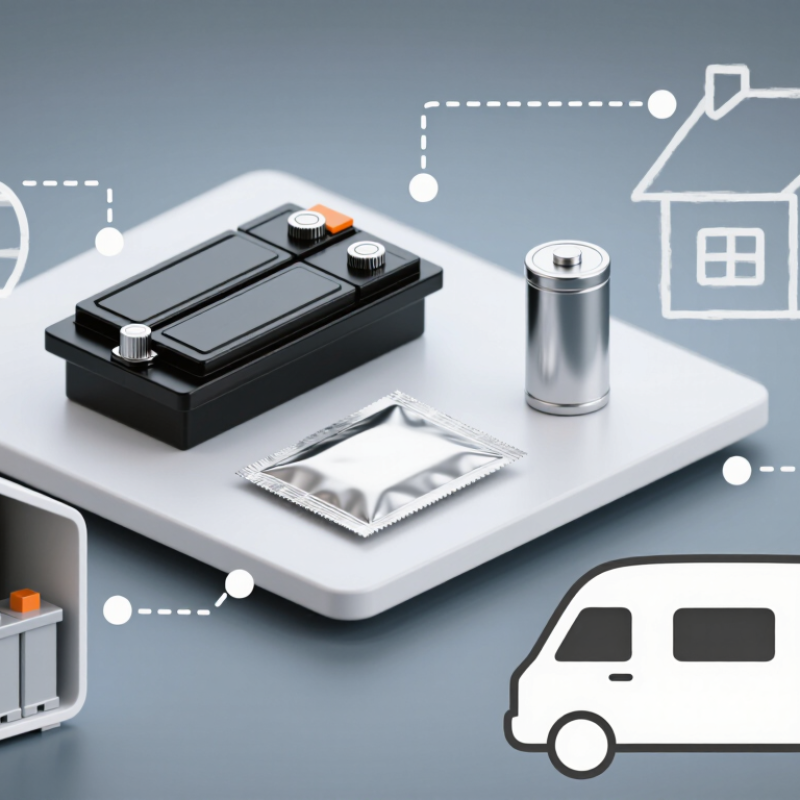
The best lithium battery in 2026 depends on the job, not a single ranking. For a home energy system or recreational vehicle, lithium iron phosphate (LFP) is often a practical choice. It offers long cycle life and good thermal stability, though its lower energy density can mean a larger, heavier pack. For a compact device or electric vehicle, nickel-rich lithium-ion chemistries can store more energy in less space. They may need closer attention to heat and charging limits.
Cold weather changes the decision. Some chemistries lose usable power faster in low temperatures, so check the battery’s operating range before installing it outdoors. Frequent charging, limited space, and expected daily use also matter. A battery that looks ideal on a comparison chart may not fit the system’s voltage, charger, or battery management system. That detail is easy to overlook.
Tips: Match the chemistry to your real conditions. Check rated capacity, continuous current, temperature limits, and cycle-life test conditions. Leave room for ventilation and safe installation. If the battery will face freezing temperatures, confirm whether charging is restricted or requires built-in heating. Small specifications matter. Even careful planning has uncertainties: actual life depends on use, temperature, and maintenance.
What Is the Best Lithium Battery in 2026? - Matching Battery Types to Different Applications
Typical characteristics of major rechargeable lithium-ion chemistries. The best choice depends on application priorities, operating conditions, and system design.
| Battery Chemistry |
Typical Nominal Cell Voltage |
Typical Cell-Level Specific Energy |
Typical Cycle Life |
Key Advantages |
Main Trade-Offs |
Well-Suited Applications |
| Lithium Iron Phosphate (LFP) |
About 3.2 V |
Approximately 90–160 Wh/kg |
Often 2,000–6,000 cycles |
Long service life, good thermal stability, and strong performance for frequent cycling. |
Lower energy density than many nickel-rich chemistries; packs can be larger or heavier for the same energy. |
Stationary energy storage, solar systems, backup power, and many electric vehicles where durability is a priority. |
| Nickel Manganese Cobalt (NMC) |
About 3.6–3.7 V |
Approximately 150–250 Wh/kg |
Often 1,000–2,000 cycles |
Balanced energy density, power capability, and performance across a wide range of designs. |
Thermal management and battery protection are important; performance and cost vary with cell formulation. |
Electric vehicles, power tools, and portable equipment where a balance of range and power is needed. |
| Nickel Cobalt Aluminum (NCA) |
About 3.6–3.7 V |
Approximately 200–260 Wh/kg |
Often 500–1,500 cycles |
High energy density, making it useful when compact size or longer driving range is important. |
Requires careful charging, thermal control, and protection; cycle life depends strongly on operating conditions. |
Long-range electric vehicles and applications where high energy per unit mass is a key requirement. |
| Lithium Titanate (LTO) |
About 2.3–2.4 V |
Approximately 50–90 Wh/kg |
Often 5,000–20,000 or more cycles |
Very long cycle life, fast charging capability, and good performance in demanding operating conditions. |
Lower cell voltage and energy density can increase system size, weight, and cost per unit of stored energy. |
High-cycle industrial equipment, fast-charge transit, grid support, and applications needing frequent rapid charging. |
| Lithium Cobalt Oxide (LCO) |
About 3.6–3.7 V |
Approximately 150–200 Wh/kg |
Often 500–1,000 cycles |
High energy density in compact cells. |
Less suited to high-power or long-cycle applications; requires robust protection and thermal management. |
Compact consumer electronics and portable devices where size and energy capacity are priorities. |
How to choose: Consider usable energy, power demand, operating temperature, charging speed, expected cycle frequency, safety requirements, and total system cost. Figures are indicative cell-level ranges; actual results vary by cell design, manufacturer specifications, depth of discharge, temperature, charge rate, and test method. Cycle-life figures are not directly comparable unless tested under the same conditions.
Factors to Consider When Choosing a Lithium Battery
The best lithium battery in 2026 depends on the job, not a single headline specification. Start with the equipment’s required voltage, peak current, and available space. A battery that fits physically may still lack the power needed when a motor starts or an appliance switches on. Compare usable capacity, not just the advertised capacity, and leave room for normal energy losses.
Chemistry matters. Lithium iron phosphate batteries often suit applications that value long cycle life and thermal stability, while nickel-based lithium batteries can offer more energy in a smaller, lighter pack. Neither choice is automatically right for every user. Check that the battery management system supports the charger and protects against overcharging, excessive discharge, and temperature extremes. Check the label. Also review cycle-life figures carefully: test conditions vary, and real performance depends on charge habits and operating temperature.
Think about where the battery will work. A garage that freezes in winter or a sun-heated storage cabinet can affect charging and lifespan. Confirm the stated operating limits, warranty terms, and availability of qualified support. Small details matter. I would also compare the total cost over time, not only the purchase price; still, lifespan estimates are estimates, and actual use can be less tidy than a test sheet suggests.
What Is the Best Lithium Battery in 2026?
Typical cycle-life ranges by lithium-ion chemistry
How to use this comparison: Cycle life is the approximate number of full charge-discharge cycles before capacity falls to about 80% of its original level. Lithium titanate (LTO) and lithium iron phosphate (LFP) often offer longer cycle life, while nickel-rich chemistries can provide higher energy density. Actual results depend on cell design, temperature, depth of discharge, and charging conditions, so choose based on your application—not cycle life alone.