How to Choose Flow Batteries for Your Business?

Choosing Flow Batteries for a business starts with a practical question: what job must the system perform? A warehouse may need to cover an evening peak, while a factory may need longer backup during scheduled outages. Those needs shape the required power, storage duration, and operating schedule. A battery that looks impressive on a specification sheet may still be a poor fit for the site.

Flow Batteries store energy in liquid electrolytes held in external tanks, a design that can support longer-duration storage and separate power from energy capacity. But chemistry, usable capacity, efficiency, temperature limits, footprint, and maintenance needs vary by system. Details matter. Compare vendor data with your actual load profile, including peak demand, daily cycling, and seasonal changes. Ask how the equipment connects to existing inverters, controls, and backup systems. Then review installation requirements, service arrangements, warranties, and the full cost over the expected operating life. A quoted price alone rarely tells the whole story.

This guide outlines how to assess these factors and compare options with clearer criteria. It also considers site space, safety provisions, expansion plans, and the practical demands of daily operation. Some projections will remain uncertain; energy prices and operating patterns can change. That deserves attention. A careful decision uses documented assumptions, independent technical review where appropriate, and questions that expose what a proposal does not explain.
How to Choose Flow Batteries for Your Business?

Understanding How Flow Batteries Store and Deliver Energy

How to Choose Flow Batteries for Your Business?
Understanding How Flow Batteries Store and Deliver Energy

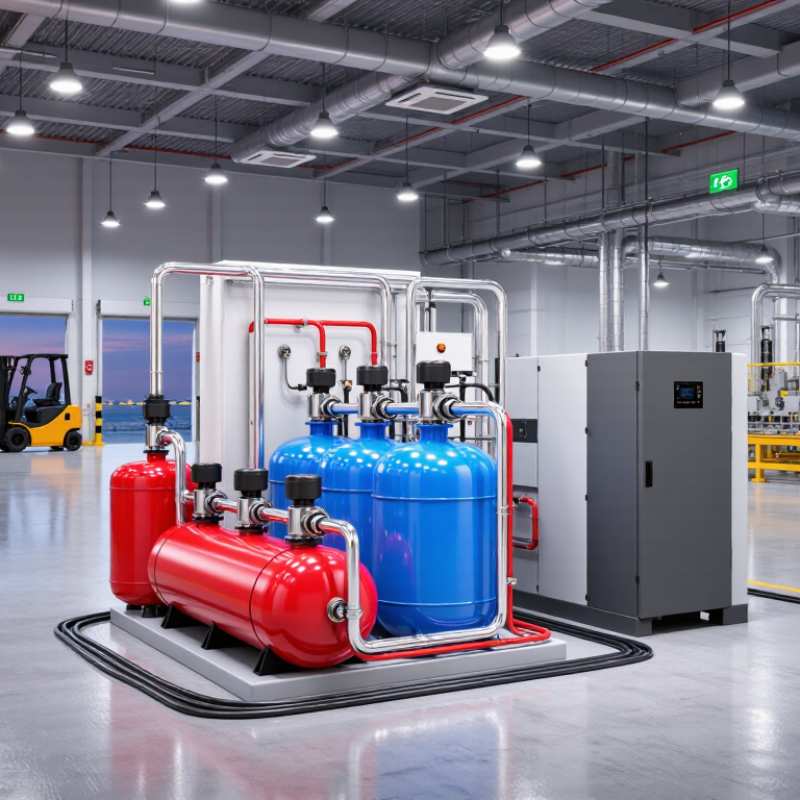
A flow battery stores energy in liquid electrolytes held in external tanks. Pumps move these liquids through a cell stack, where an ion-exchange membrane separates them. During charging, electrical energy changes the chemical state of the electrolytes. During discharge, the reactions reverse and send electricity back to the site. That is the mechanism. The tanks hold energy; the cell stack largely determines power output.

This separation matters when matching storage to a business load. Larger tanks can support longer discharge periods, while a larger stack can deliver more power at once. A warehouse with long evening peaks may value duration more than a brief, high-power burst. Not quite simple. Pumping uses some energy, and actual performance depends on system design, operating temperature, and maintenance.

Before choosing a system, map hourly demand and identify how often it will charge and discharge. Ask for measured efficiency across the expected operating range, not just a best-case figure. Check tank footprint, service access, fluid-handling procedures, and how local conditions may affect performance. Flow batteries can suit frequent cycling and long-duration storage, but their tanks and pumps need space. The diagrams look tidy; real sites rarely are. A careful site assessment can reveal constraints that a spreadsheet misses.

Defining Your Business’s Energy Storage Requirements

Defining your business’s energy-storage requirements starts with the load, not the battery. Gather at least 12 months of interval-meter data, then mark peak demand, overnight use, and outage-critical equipment. A cold-storage site may need steady power through a long evening peak; a workshop may need short bursts during machine starts. How many hours matter? The U.S. Department of Energy’s 2023 Pathways to Commercial Liftoff: Long Duration Energy Storage report uses 10 hours or more as a long-duration benchmark. Treat that as a reference, not a design rule.

Separate the power requirement from the energy requirement. Power, measured in kilowatts, sets how much equipment can run at once; energy, measured in kilowatt-hours, sets how long it can run. This distinction suits flow batteries, whose power and energy capacities can be sized independently. The DOE’s 2022 Grid Energy Storage Technology Cost and Performance Assessment modeled redox-flow battery round-trip efficiency at about 65%. Account for that loss when estimating charging needs: a system delivering 400 kWh may need roughly 615 kWh of charging energy at that efficiency. Actual performance varies. Real sites are messier. Check available floor space, ventilation, maintenance access, utility limits, and plans for expansion. Then test the sizing against both a typical week and a difficult one; a single peak day rarely tells the whole story.

Comparing Flow Battery Chemistries and System Configurations

How to Choose Flow Batteries for Your Business?
Comparing Flow Battery Chemistries and System Configurations

Flow battery chemistry shapes operating costs, maintenance, and how a system handles daily cycling. Vanadium systems use the same element in both electrolyte tanks, which can reduce cross-contamination concerns. Their electrolyte may retain value over a long service life, but upfront costs and tank space need careful assessment. Iron-based systems can offer a lower-cost materials pathway, though performance depends strongly on electrolyte formulation and operating conditions. Zinc-bromine designs can provide higher energy density in some applications, but require careful management of materials and maintenance. No chemistry wins in every setting.

Configuration matters just as much. Flow batteries separate power from stored energy: the cell stack largely sets power, while tank volume determines duration. A facility needing four hours of backup may prioritize larger tanks; one facing brief demand spikes may need more stack capacity. Consider whether the system will connect behind the meter, support renewable generation, or participate in grid services. Those uses affect controls, inverter sizing, and how often the battery cycles. Small details count, like available floor loading and space for service access.

Ask suppliers for performance data at your expected temperature, charge rate, and discharge duration, not just headline ratings. Compare warranted capacity, auxiliary loads, electrolyte replacement plans, and response times for service. A spreadsheet can make options look precise. It cannot predict every operating constraint, so confirm assumptions with site measurements and an independent engineering review.

How to Choose Flow Batteries for Your Business?

Comparing indicative round-trip efficiency ranges across flow battery chemistries

How to read this: Higher round-trip efficiency means less energy is lost during charging and discharging. These indicative ranges vary with system design, operating conditions, and how efficiency is measured; compare project-specific guarantees alongside duration, cost, safety, and maintenance requirements.

Assessing Costs, Performance, Safety, and Site Compatibility

Start with the duty the system must perform. Record the required discharge duration, daily operating hours, and backup needs. Flow batteries can suit long-duration storage because tank size and power capacity can be configured separately. Ask for usable energy at the connection point, not just the stack’s rated output.

Include installation, pumps, controls, maintenance, and expected component replacement in the cost estimate. Compare lifetime cost per delivered kilowatt-hour. A low purchase price can hide expensive site work.

Performance figures need context. Request test conditions for round-trip efficiency, output, and operating temperature. Check how efficiency changes at partial load, since real sites rarely run at one perfect setting. Ask for degradation data and a clear explanation of what the warranty measures. Field data helps.

Safety also depends on the installation, not chemistry alone. Review leak detection, secondary containment, ventilation, and emergency access with qualified engineers.

Walk the site before choosing a system. Measure available space, floor loading, delivery routes, and clearance around tanks and equipment. Confirm electrical capacity, water management needs, drainage, and noise limits. Small details matter. A narrow gate or weak floor can add cost and delay commissioning. Compare the layout with the supplier’s drawings, then verify dimensions on site; drawings are sometimes optimistic.

Evaluating Suppliers, Maintenance, and Long-Term Service Needs

Choose suppliers by testing their service promises, not just their quoted price. Ask for references from installations with similar daily cycling and discharge duration. Request written details on electrolyte checks, pump and stack replacement, control-system updates, spare-part availability, and technician response times. A low-cost system can become expensive if a failed pump waits days for a specialist.

The U.S. Department of Energy’s 2022 Grid Energy Storage Technology Cost and Performance Assessment uses planning assumptions of roughly 65% round-trip efficiency and a 20-year life for vanadium flow batteries. These are modeling benchmarks, not guarantees for your site. Compare the supplier’s warranty assumptions with your operating schedule, expected throughput, and local service coverage. I would also ask who handles commissioning and performance testing after installation. A tidy proposal may still leave gaps.

Tips: Put service levels in the contract: response windows, parts coverage, annual maintenance tasks, and performance remedies. Ask for sample maintenance logs. Look for clear records of electrolyte condition and system alarms; details like these matter when a technician arrives at the container on a cold morning.

How to Choose Flow Batteries for Your Business? — Evaluating Suppliers, Maintenance, and Long-Term Service Needs

Evaluation Dimension What to Compare Evidence to Request from Suppliers Why It Matters to Your Business
Discharge duration and capacity Rated power (kW or MW), usable energy (kWh or MWh), discharge duration, and permitted depth of discharge. Flow-battery energy capacity can generally be increased by adding electrolyte and tank capacity, while power depends more directly on the cell stack. A site-specific design showing usable AC energy, discharge duration, operating limits, and performance at the expected ambient conditions. Matching duration to the application—such as peak shifting, renewable-energy firming, or backup—helps avoid paying for capacity that the site cannot use.
Efficiency and auxiliary loads Guaranteed AC-to-AC round-trip efficiency, measurement boundaries, operating temperature, and energy used by pumps, controls, and thermal management. A calculation or test report that identifies whether efficiency is measured at the battery terminals or at the grid connection, and includes auxiliary consumption. System-level efficiency affects the amount of energy purchased or generated to deliver each unit of stored energy. Comparisons are meaningful only when the measurement boundary is the same.
Degradation and service life Expected capacity retention, stack performance over time, operating-cycle assumptions, and conditions that trigger component refurbishment. These values depend on chemistry, design, and use. Written degradation assumptions and a lifecycle model that distinguishes stack replacement or refurbishment from electrolyte replacement or servicing. Lifecycle assumptions influence usable capacity, operating costs, and the timing of future service work.
Electrolyte and containment Electrolyte chemistry, tank materials, containment design, leak detection, handling procedures, and recovery or disposal arrangements. Safety properties vary by chemistry. Safety data sheets, containment drawings, emergency procedures, and documented plans for electrolyte testing, recovery, and end-of-life handling. Clear procedures help the business assess site suitability, worker protection, environmental obligations, and end-of-life costs.
Maintenance requirements Inspection tasks and intervals for pumps, valves, seals, filters, sensors, piping, controls, and cell stacks. Maintenance schedules are system-specific. A preventive-maintenance schedule, estimated labor hours, required spare parts, recommended service tools, and a list of tasks that can be performed by site personnel. Flow systems include mechanical and fluid-handling equipment as well as electrical components. Understanding the workload helps with staffing and planned downtime.
Availability and response times Guaranteed system availability, exclusions, remote monitoring arrangements, fault-response targets, and the process for restoring operation. Contract definitions for availability and downtime, service-level targets, escalation contacts, and examples of performance reporting. Operational commitments should match the financial or operational consequences of an outage at the site.
Warranty and long-term service Warranty duration, covered equipment, energy-throughput or operating-hour limits, performance guarantees, exclusions, and service-contract renewal terms. Draft warranty and service agreements, including remedies if guaranteed performance is not achieved and the responsibilities of each party. A clear division of responsibilities reduces uncertainty about labor, parts, performance shortfalls, and service costs over the project life.
Spare parts and supplier support Local service coverage, spare-parts availability, lead times, software support, and availability of qualified technicians over the expected operating period. A parts list with expected replacement items, stocking locations, lead-time estimates, training options, and a continuity plan for long-term support. Parts and service access can affect recovery time and the practical maintainability of the installation.
Integration and site requirements Footprint, tank access, foundations, electrical connection, controls integration, ventilation, drainage, and commissioning requirements. A site-layout package, electrical interface specifications, grid or microgrid integration plan, and a schedule of commissioning tests. Early review can uncover site work, permitting, and integration needs that affect project cost and schedule.
Commercial lifecycle cost Installed cost, operating and maintenance costs, efficiency losses, service-contract costs, component refurbishment, and end-of-life obligations. A lifecycle cost model with stated assumptions, exclusions, replacement scenarios, energy prices, and sensitivity analysis. Comparing total cost over the same project period is more informative than comparing purchase price alone.

Note: Performance, maintenance intervals, service life, and safety requirements vary by chemistry, system design, operating conditions, and contract. Request project-specific, independently verifiable guarantees and compare suppliers using consistent assumptions.