How to Choose the Right Lithium Battery for Your Needs?

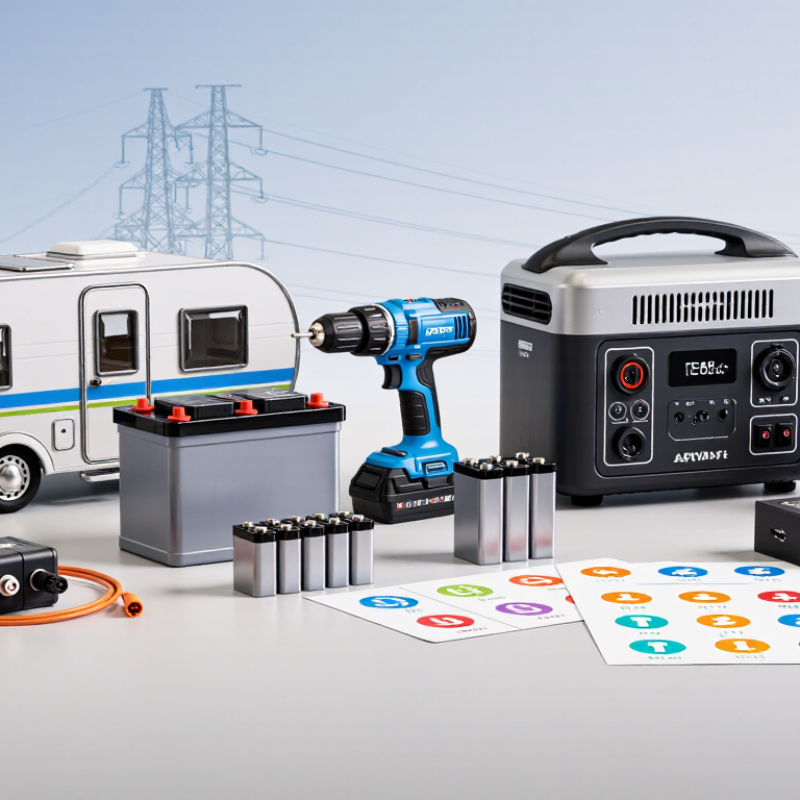
Choosing the right Lithium Battery is not simply a matter of picking the largest capacity. The best option must match the device, operating conditions, and charging system. A battery for a camper van faces different demands from one powering a cordless drill or backup system. Fit matters. So does safety.

The International Energy Agency reported that electric-vehicle battery demand exceeded 750 gigawatt-hours in 2023, about 40% higher than in 2022. That growth makes battery knowledge increasingly relevant beyond vehicle makers. IEA Executive Director Fatih Birol has described the broader shift as the “Age of Electricity.” For buyers, the practical lesson is to compare specifications carefully, not just brands. Check chemistry, nominal voltage, usable capacity, continuous discharge rating, cycle-life conditions, and battery-management protections. A 100-amp-hour label alone tells only part of the story.

Start with the load. A small inverter and a high-draw motor need different discharge performance. Then check whether the charger supports the battery’s chemistry and voltage. Temperature limits matter, too, especially for batteries used outdoors. Details matter. Manufacturer test conditions can differ, so cycle-life figures are not always directly comparable. No checklist is perfect. I have seen buyers focus on capacity and overlook connector compatibility, a simple mismatch that can delay an installation. Treat published figures as evidence, not a promise. The right choice is the one whose verified specifications fit your actual use, with sensible headroom and clear safety documentation.
How to Choose the Right Lithium Battery for Your Needs?

Identify Your Device’s Voltage and Power Requirements

Before comparing lithium batteries, read the device label and manual. Find the required voltage, usually listed in volts (V), and note whether it refers to nominal or operating voltage. A battery’s nominal voltage may differ from its voltage when fully charged. That difference matters: a pack that looks close on paper may still exceed the device’s limits. Check carefully.

Next, identify the power demand. If the device lists watts (W), divide watts by volts to estimate current in amperes (A): for example, a 24-watt load at 12 volts draws about 2 amps. Choose a battery that can safely supply at least the required continuous current. Motors and other devices may draw a brief surge when starting, so check their peak demand too. Do not rely on capacity alone; amp-hours (Ah) estimate runtime, not whether the battery can deliver enough current.

Confirm that the battery’s chemistry, cell arrangement, connector, and charging requirements are compatible with the device. Use the specified charger, and avoid mixing voltage assumptions from different sources. A small label can be hard to read, and manuals sometimes omit peak-current details. If the figures conflict, pause and verify them with a qualified technician rather than guessing. I’ve found that checking the device’s actual label often catches a mismatch that a quick online search misses.

Compare Lithium Battery Chemistries and Their Trade-Offs

Lithium battery chemistry is a trade-off, not a ranking. Lithium iron phosphate (LFP) suits many stationary systems and daily-use vehicles, where long service life and thermal stability matter. It usually stores less energy per kilogram than nickel manganese cobalt (NMC), though. That difference can mean a heavier pack or less driving range.

The International Energy Agency’s Global EV Outlook 2024 reports that LFP’s share of the global electric-car battery market rose from under 10% in 2018 to nearly 40% in 2023. Its lower cost helped drive adoption. NMC remains attractive when space and weight are tight, such as in a vehicle designed for longer range. But its nickel and cobalt content brings material-sourcing considerations, and higher energy density does not automatically mean a better fit.

Lithium titanate (LTO) can handle frequent cycling and high-power charging, but its lower energy density can make a compact pack impractical. Picture a battery in an unheated workshop: cold-weather performance, charging limits, and the inverter’s voltage range may matter more than a headline capacity figure. Check the full system specifications. Test results also vary by cell design and operating conditions, so chemistry alone cannot predict service life. That part is easy to underestimate.

How to Choose the Right Lithium Battery for Your Needs? - Compare Lithium Battery Chemistries and Their Trade-Offs

Chemistry Typical Nominal Cell Voltage Typical Cell-Level Energy Density Typical Cycle-Life Range Thermal Stability Relative Cost per kWh Common Strengths Main Trade-Offs Often Suited To
LFP (Lithium Iron Phosphate) About 3.2 V About 90–160 Wh/kg About 2,000–6,000 cycles High relative to many other lithium-ion chemistries Low to moderate Long service life, good thermal stability, and no cobalt or nickel in the cathode Lower energy density; cold-weather charging may require limits or battery heating Stationary storage, buses, and vehicles where durability and cost matter more than compact size
NMC (Lithium Nickel Manganese Cobalt Oxide) About 3.6–3.7 V About 150–250 Wh/kg About 1,000–2,500 cycles Moderate; pack design and battery management are important Moderate to high Balanced energy density, power capability, and cycle life; multiple formulations are available Contains nickel and cobalt; performance and cost vary with formulation and operating conditions Electric vehicles, power tools, and applications needing a balance of range and power
NCA (Lithium Nickel Cobalt Aluminum Oxide) About 3.6–3.7 V About 200–260 Wh/kg About 1,000–2,000 cycles Requires careful thermal and charge management Moderate to high High energy density and good power capability Contains nickel and cobalt; safety, lifetime, and cost depend strongly on cell and pack design Applications prioritizing high range or low weight, with robust battery controls
LCO (Lithium Cobalt Oxide) About 3.6–3.7 V About 150–240 Wh/kg About 500–1,500 cycles Lower than LFP; protection and thermal control are important Moderate to high High energy density in compact cells Uses cobalt; typically offers shorter cycle life and lower power capability than many alternatives Portable electronics where compact size and energy per unit weight are priorities
LTO (Lithium Titanate) About 2.3–2.4 V About 50–90 Wh/kg About 5,000–15,000+ cycles Generally high; still requires an appropriate battery management system High Very long cycle life, high charge and discharge capability, and good low-temperature performance Low energy density, lower cell voltage, and typically higher upfront cost Frequent-cycling storage, fast-charge uses, and demanding industrial or transport applications

Note: Figures are indicative ranges for cells, not guarantees. Actual energy density, cycle life, charging limits, safety, and cost vary by cell design, operating temperature, depth of discharge, charge rate, and battery management. Compare complete battery packs and follow the manufacturer’s specifications.

Calculate the Capacity and Runtime You Need

To choose the right lithium battery, estimate energy use before comparing capacity labels. Multiply each device’s watts by the hours it runs, then add the results in watt-hours (Wh). A 60-watt router running for eight hours uses 480 Wh. Add other loads, such as lights or a small fan. Measure, don’t guess.

Next, account for usable capacity, conversion losses, and a reserve for unexpectedly long use. If your system can deliver 90% of its rated energy, 480 Wh of demand calls for at least 533 Wh of rated capacity. This is a planning example, not a universal efficiency figure. NREL’s 2024 Annual Technology Baseline models utility-scale lithium-ion storage at about 85% round-trip efficiency; home systems can differ. Also check peak power: a battery may have enough energy but still struggle with a device’s startup surge.

Tips: Read the battery’s usable-capacity and continuous-output specifications, not just its headline Wh rating. Test your real setup for a day and record the load. Real use is messier. A cold garage, aging cells, or an overlooked charger can change runtime. Recheck your estimate when your devices or usage hours change.

Check Battery Size, Connectors, and Compatibility

Measure the battery compartment before comparing capacity. Record its length, width, height, and clearance for cables; a case that nearly fits may still pinch a wire. Then check nominal voltage, capacity, and continuous discharge current against your device’s requirements. More amp-hours do not compensate for incorrect voltage or inadequate current. Looks can mislead.

Check the connector’s shape, polarity, pinout, and current rating. A plug that clicks into place may still be wired differently. Confirm that the battery management system and charger support the same chemistry and charging limits, too. The International Energy Agency’s Global EV Outlook 2024 reports that electric-car battery demand reached about 750 GWh in 2023, roughly 40% above 2022. That growth makes clear why “lithium battery” alone is not a useful compatibility specification. I’d verify the datasheet, not just the product photo. It is an easy step to skip. Compare the battery’s permitted operating temperature with where it will be used, and leave room for secure mounting. If the seller cannot confirm the pinout or discharge rating, pause and check with a qualified technician.

Assess Safety Features, Charging Needs, and Operating Conditions

Choosing a lithium battery starts with the conditions it must handle, not just its capacity. Check for a battery management system that monitors cell voltage and temperature, and protects against overcurrent. Ask what happens when a sensor or connection fails; protection details vary. Small details matter. A clearly stated operating range and discharge rating are more useful than vague claims of durability.

Match the charger to the battery’s chemistry, voltage, and permitted charging current. A charger that merely fits the connector may still be unsuitable. Check the battery manual for temperature limits, especially if charging in a cold garage or hot utility room. Some lithium batteries must not be charged below freezing unless their design specifically allows it. That distinction is easy to miss.

Consider where the battery will sit and how it will work. A battery powering a pump may face repeated high-current starts, while one in a camper may experience vibration and wide temperature swings. Compare those demands with its continuous and peak discharge ratings. Also check whether the enclosure resists the dust or moisture present at your installation site. I would leave some margin in the ratings; real conditions rarely match a neat specification sheet exactly.