China Best Flywheel Energy Storage Manufacturers

Choosing the best China flywheel energy storage manufacturers requires more than comparing catalog prices. Flywheel Energy Storage systems store electricity through a rotating mass, often inside a vacuum enclosure. Magnetic bearings, motor generators, and control software influence their real performance. These systems can respond within milliseconds, making them useful for frequency regulation, voltage support, and short-duration backup power. Their value becomes visible during demanding events, such as factory load changes or sudden grid disturbances.

A reliable manufacturer should explain rotor materials, operating speed, discharge duration, and thermal management clearly. It should also provide test records, maintenance procedures, safety protections, and project references. Useful evidence includes factory quality controls, prototype validation, field commissioning reports, and compliance with relevant international or Chinese standards. This guide examines leading Chinese suppliers through those practical criteria, rather than relying on promotional claims. Factory audits matter. Data matters.

Performance varies between projects. A system designed for seconds of power support may not suit long-duration backup. Some brochures also present laboratory results without explaining site conditions. That gap deserves attention. We will compare technical capability, customization, lifecycle service, delivery reliability, and total ownership cost. Readers should also check warranty terms and spare-part availability before signing contracts. The strongest manufacturer may not offer the lowest quotation. It should offer transparent engineering, measurable performance, and responsible support after installation. Even this approach has limits, because public information can be incomplete and supplier capabilities may change.
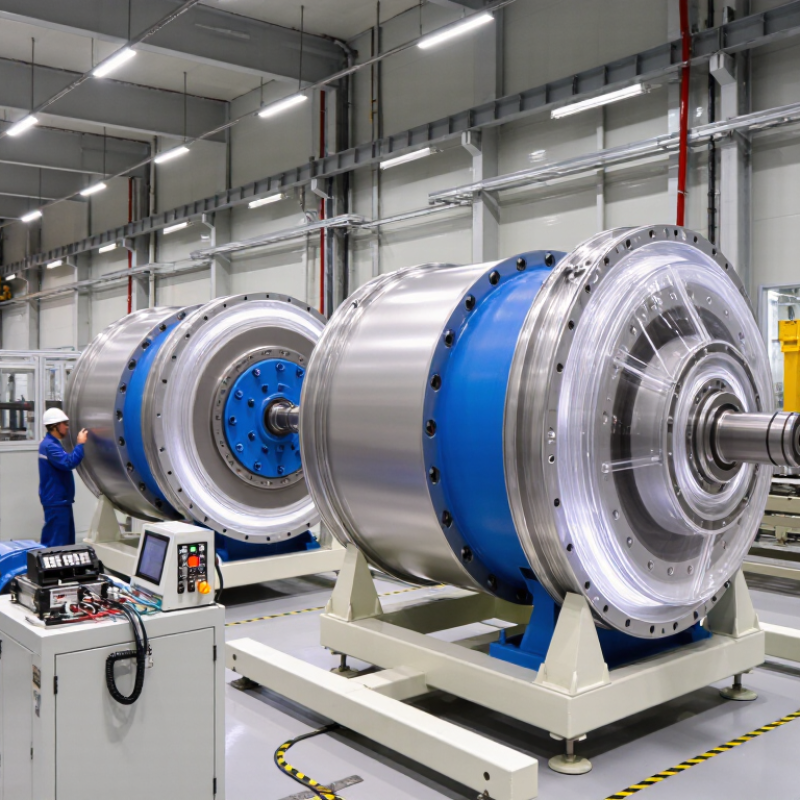
China Best Flywheel Energy Storage Manufacturers

Definition and Role of Flywheel Energy Storage in China

China Best Flywheel Energy Storage Manufacturers

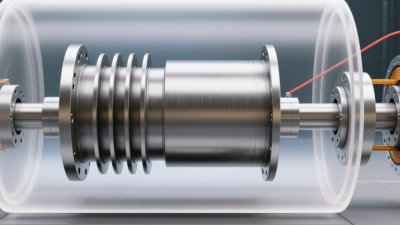
Flywheel energy storage stores electricity as rotational kinetic energy. A motor accelerates a heavy rotor, while a generator releases power when demand rises. Modern systems use magnetic bearings and vacuum chambers to reduce friction. They respond within milliseconds and tolerate frequent charge-discharge cycles.

China’s National Energy Administration reported 73.76 GW of new-type energy storage capacity by the end of 2024, rising 130% year on year. Most capacity remains battery-based, but flywheels serve a different role. They support grid frequency regulation, industrial power quality, rail braking recovery, and short-duration backup. The IEA’s Electricity 2024 report also identified flexibility as essential for integrating more variable renewable power. Flywheels can provide that fast flexibility, often for seconds or several minutes. Their weakness is equally clear: energy duration remains limited, and standby losses require careful design. The technology is promising, but not a universal battery replacement.

Tips: Evaluate response time, usable duration, round-trip efficiency, rotor safety, and maintenance access. Ask for independently verified test results, not only laboratory claims. Site conditions matter. Dust, temperature, grid strength, and cycling patterns can change actual performance. A flawed assumption here can make a technically impressive project uneconomic.

How Flywheel Energy Storage Systems Work

China Best Flywheel Energy Storage Manufacturers

How Flywheel Energy Storage Systems Work

A flywheel storage system stores electricity as rotational energy. Power enters through a motor-generator. The motor accelerates a heavy rotor inside a low-pressure chamber. The spinning rotor holds energy through inertia. When demand rises, the generator slows the rotor and releases electricity through power electronics.

Modern systems use magnetic or mechanical bearings. Vacuum operation reduces air resistance and heat loss. Control software monitors speed, temperature, vibration, and grid frequency. Response can occur within milliseconds. The U.S. Department of Energy’s Energy Storage Handbook reports typical round-trip efficiency near 85% to 90%. It also identifies strong cycle performance as a major advantage. Some industrial systems can complete hundreds of thousands of shallow cycles. Yet energy duration often remains limited, commonly from seconds to around 30 minutes.

Tips: Match the flywheel to fast, repeated power events. Check rated power, usable energy, standby losses, noise, and safety containment. Sandia National Laboratories’ electricity storage assessments emphasize that application duty cycles strongly affect cost and performance. A larger rotor is not always better. It may increase stored energy, but it can raise bearing and containment demands. Site testing matters. Real operating conditions rarely resemble laboratory curves. A practical design should leave thermal and mechanical margins. That part is sometimes underestimated.

Key Features of China’s Leading Flywheel Manufacturers

China Best Flywheel Energy Storage Manufacturers

China’s leading flywheel manufacturers compete through fast response, durable rotors, and precise power control. Their systems typically use carbon-fiber rotors inside vacuum chambers. Magnetic bearings reduce friction and mechanical wear. Some designs reach response times below one second, according to the U.S. Department of Energy’s Electricity Storage Handbook.

Efficiency matters in real projects. DOE technical assessments commonly report 85%–95% round-trip efficiency for flywheel systems. They also describe very high cycling capability, often exceeding 100,000 cycles under suitable conditions. Chinese suppliers increasingly combine flywheels with bidirectional converters, sensors, and modular control cabinets. This supports frequency regulation, voltage support, and short-duration backup.

Safety engineering is another key feature. Leading factories monitor rotor speed, bearing temperature, vibration, and vacuum pressure continuously. A reinforced containment housing can limit damage during a rare rotor failure. Factory acceptance tests should include overspeed checks, thermal trials, and repeated charge-discharge cycles. Service teams also need practical experience, not only attractive specifications.

The picture is not perfect. Flywheels usually store energy for seconds or minutes, rather than overnight use. Their standby losses can also increase when vacuum performance declines. Buyers should therefore examine measured data, maintenance records, noise levels, and installation conditions. IRENA’s Electricity Storage and Renewables report emphasizes matching storage technology with application needs, not simply selecting the highest advertised power.

Major Applications of Chinese Flywheel Energy Storage Technology

China Best Flywheel Energy Storage Manufacturers

Major Applications of Chinese Flywheel Energy Storage Technology

Chinese flywheel energy storage technology is moving beyond laboratory demonstrations. Its strongest applications require fast power, frequent cycling, and predictable control. The U.S. Department of Energy’s Energy Storage Handbook reports response times in milliseconds for flywheel systems. This speed supports frequency regulation, voltage stabilization, and short-duration backup. Chinese manufacturers increasingly design systems for data centers, metro networks, factories, and renewable-energy sites.

Data centers are a practical target. The IEA’s Electricity 2025 report estimates global data-center electricity demand could reach about 945 TWh by 2030, more than double 2024 levels. Flywheels can bridge the gap between grid failure and generator startup. They also reduce battery stress during repeated switching events. In rail transit, regenerative braking energy can charge a flywheel and return power during acceleration. Industrial cranes and automated production lines need similar bursts of power. However, duration remains the weak point. Most flywheel systems cannot replace long-hour storage without additional technologies.

Tips: Check rotor safety design, vacuum performance, bearing type, and control response. Ask for measured cycle-life data, not only marketing estimates. Site testing matters because dust, vibration, and temperature can reduce real output. A 2023 Sandia National Laboratories energy-storage review also highlights lifecycle performance as a key comparison factor. The numbers look attractive, but operating conditions still deserve more attention.

How to Evaluate China’s Flywheel Energy Storage Manufacturers

How to Evaluate China’s Flywheel Energy Storage Manufacturers

Evaluating China’s flywheel energy storage manufacturers requires more than comparing quoted prices. I look for proven operating data from systems already connected to demanding applications. Ask for rotor speed, usable energy, response time, round-trip efficiency, and expected cycle life. Numbers should come from witnessed tests, not only product brochures. Request operating records from sites with similar load profiles. Real evidence matters.

Examine the mechanical design closely. A reliable system should explain its rotor material, containment structure, vacuum level, bearing arrangement, and braking controls. Ask how the enclosure handles overspeed events and repeated thermal changes. Safety documentation should be clear and traceable. Independent testing is valuable. So are factory quality records, inspection procedures, and calibration certificates.

Supplier support often reveals more than sales presentations. Check spare-parts availability, remote monitoring, maintenance intervals, training, and response times for faults. Review warranty exclusions carefully. Ask whether performance changes under high ambient temperatures, dust, or frequent partial cycling. I would also compare grid-integration studies and local service capacity before signing a contract. One weakness remains easy to miss: short demonstration projects may hide long-term bearing wear or declining vacuum performance. A careful buyer should request extended test results and accept that some published assumptions still need verification.

China Best Flywheel Energy Storage Manufacturers - How to Evaluate China’s Flywheel Energy Storage Manufacturers

A practical, company-neutral evaluation framework for comparing flywheel energy storage suppliers in China. The benchmark values below are indicative screening references and must be verified through project-specific test reports, contracts, and site acceptance testing.

Evaluation Dimension Key Measurable Metric Indicative Benchmark or Verification Point Evidence to Request Suggested Weight
Power and Response Performance Rated power, response time, ramp rate, and power accuracy Flywheel systems are generally suited to rapid power delivery, with response commonly measured in milliseconds to seconds depending on the power-conversion system and controls. Factory acceptance test results, power-step curves, control-system specifications, and independently witnessed performance tests. 15%
Round-Trip Efficiency AC-to-AC efficiency at defined power and duration For many modern flywheel systems, an indicative project-level screening range is approximately 80%–95%; efficiency varies with converter losses, vacuum conditions, standby consumption, and operating point. Efficiency curves at 25%, 50%, 75%, and 100% load, auxiliary-load data, test conditions, and guaranteed minimum efficiency. 10%
Cycle Life and Degradation Permitted cycles, energy throughput, and capacity retention Flywheels can support frequent cycling. Some designs are marketed for tens of thousands to more than 100,000 cycles, but the verified figure depends on rotor stress, operating depth, speed range, and maintenance intervals. Life-test reports, rotor fatigue calculations, maximum overspeed history, degradation model, and guaranteed throughput or cycle count. 12%
Power-to-Energy Fit Discharge duration, usable energy, minimum state of charge, and continuous power capability Flywheel storage is typically strongest in high-power, short-duration applications, from seconds to several minutes; longer-duration configurations require careful validation of standby losses and system economics. Usable-energy curve, duration test at rated power, state-of-charge operating limits, and application-specific dispatch simulations. 10%
Rotor and Containment Safety Overspeed protection, rotor containment, vacuum integrity, vibration, and emergency shutdown A credible system should include multiple independent overspeed protections, a mechanically robust containment structure, vibration monitoring, emergency braking or shutdown logic, and documented failure-mode analysis. Overspeed-test records, rotor burst or containment analysis, finite-element reports, vibration limits, emergency procedures, and third-party safety assessments. 15%
Bearings and Vacuum System Bearing type, vacuum pressure, leakage rate, service interval, and standby losses Magnetic, mechanical, or hybrid bearing arrangements may be used. Vacuum performance is critical because aerodynamic drag directly affects self-discharge and auxiliary energy consumption. Bearing design documentation, vacuum-pressure trend data, leakage-rate specification, pump duty cycle, seal-replacement schedule, and maintenance records. 10%
Power Electronics and Grid Integration Converter topology, voltage range, frequency response, harmonics, protection, and communication interfaces The system should support the target grid connection requirements, active and reactive power control, fault response, power-quality limits, and required monitoring protocols. Single-line diagram, converter datasheet, harmonic test report, protection-coordination study, grid-code compliance report, and communication protocol list. 8%
Manufacturing Quality and Traceability Rotor balancing, material certification, non-destructive testing, assembly control, and final inspection High-speed rotating components require documented material traceability, precision balancing, dimensional control, non-destructive inspection, and controlled assembly procedures. Quality-management certificates, material certificates, balancing records, NDT reports, inspection plans, calibration records, and serial-number traceability. 8%
Availability and Maintainability Expected availability, mean time between failures, planned maintenance, and spare-parts support Availability should be calculated from actual operating data and include converter, vacuum, bearing, cooling, controls, and auxiliary-system outages rather than only rotor availability. Operational references, availability calculation method, preventive-maintenance schedule, spare-parts list, remote-monitoring plan, and service-response commitments. 5%
Commercial and Lifecycle Value Total cost of ownership, warranty, energy throughput, service cost, and end-of-life handling Evaluation should use lifecycle cost per delivered MWh or per service unit rather than purchase price alone. Frequent cycling, auxiliary consumption, and maintenance can materially affect the result. Itemized quotation, warranty exclusions, guaranteed performance terms, lifecycle-cost model, insurance requirements, replacement-part pricing, and decommissioning plan. 7%

Recommended scoring method: Score each dimension from 0 to 5, multiply by the suggested weight, and require independent verification for safety, efficiency, cycle-life, and grid-compliance claims. Do not compare manufacturers using nameplate power alone; compare equivalent operating conditions, usable energy, auxiliary consumption, warranty terms, and independently tested results.